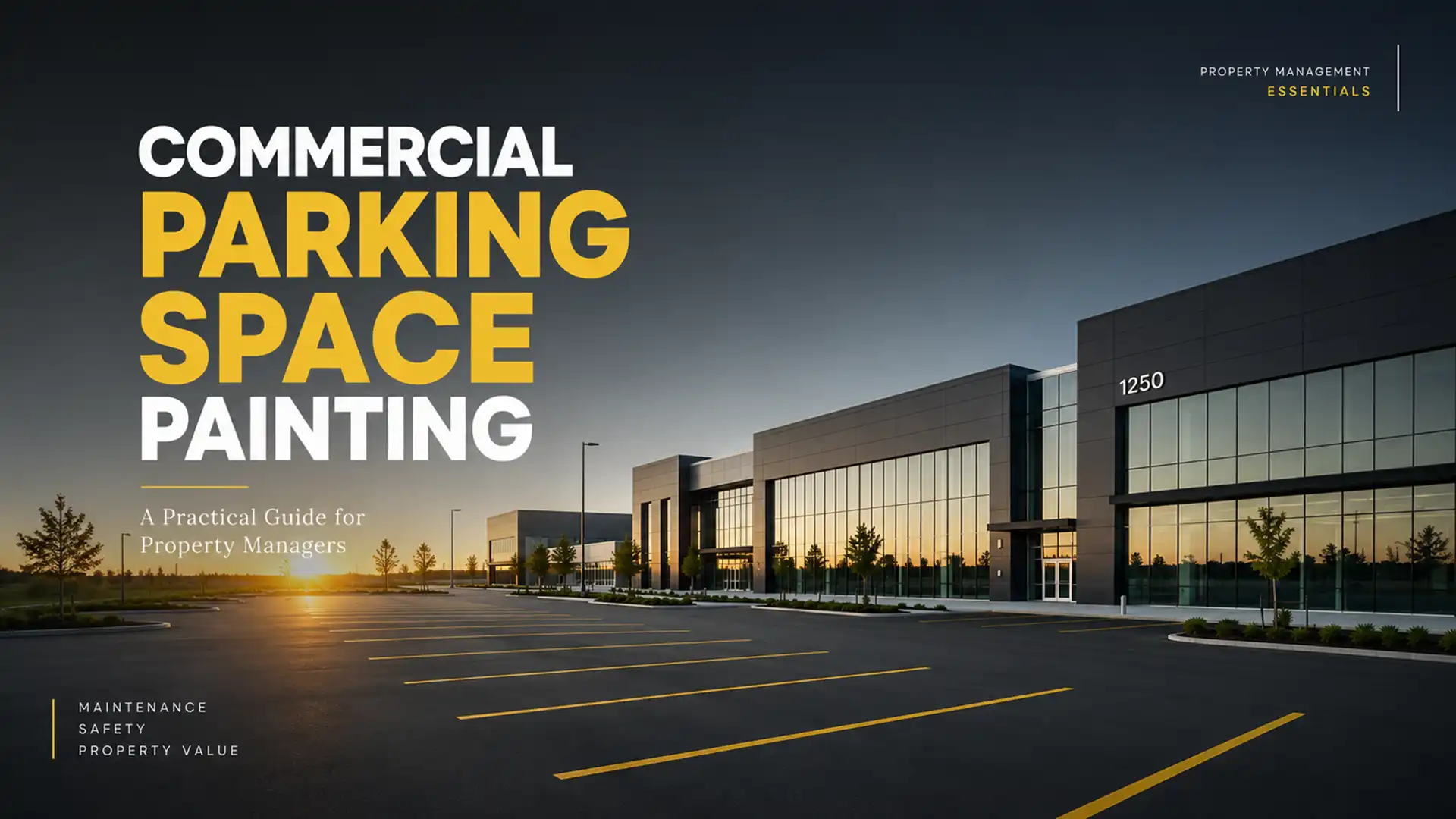
Commercial Parking Space Painting is the process of applying visible parking stall lines, directional markings, accessibility symbols, fire routes, and traffic control markings to commercial parking lots. Regular repainting improves safety, traffic flow, compliance, and property appearance while helping property managers reduce confusion, maximize parking capacity, and maintain a professional environment for tenants and visitors.
Why Commercial Parking Lot Markings Matter More Than Many Property Owners Realize
One of the most overlooked aspects of commercial property maintenance is parking lot marking visibility.
Property managers often focus on landscaping, lighting, snow removal, and building maintenance while parking lot markings gradually fade over time. The problem is that visitors interact with the parking lot before they interact with the building.
A poorly marked parking lot creates confusion, inefficient parking behavior, and a negative first impression.
In contrast, well-executed Commercial Parking Space Painting creates clear organization that improves the overall customer and tenant experience.
From retail plazas and office complexes to industrial facilities and condominium properties, parking lot markings directly influence how vehicles move through a site.
What Is Included in Commercial Parking Space Painting?
Many people assume parking lot painting only involves parking stall lines.
In reality, a complete parking lot marking program typically includes:
Parking Stalls
Clearly defined parking spaces maximize lot capacity and improve parking consistency.
Directional Arrows
Directional arrows help establish traffic flow and reduce vehicle conflicts.
Accessibility Spaces
Accessibility markings identify designated parking areas and access aisles.
Fire Routes
Clearly visible fire routes help maintain emergency vehicle access.
Loading Zones
Loading areas require distinct markings to prevent unauthorized parking.
Reserved Parking Areas
Tenant-specific, visitor, management, and service vehicle parking areas often require customized markings.
Professional Commercial Parking Space Painting ensures all these elements work together as a coordinated traffic management system.
Signs Your Parking Lot Needs Repainting
Many property managers wait until markings have almost disappeared before scheduling repainting.
In practice, repainting should occur before markings become difficult to recognize.
Common indicators include:
- Faded parking stall lines
- Inconsistent visibility across the property
- Difficulty identifying accessibility spaces
- Worn directional arrows
- Increased parking complaints
- Vehicles parking outside designated spaces
When these issues appear, Commercial Parking Space Painting becomes a preventative maintenance measure rather than a cosmetic upgrade.
Industry Observation: Parking Lots Create First Impressions
A common pattern across commercial properties is that visitors subconsciously associate parking lot conditions with overall property management quality.
When pavement markings are crisp and highly visible, visitors often perceive the property as organized and professionally maintained.
When markings are faded and difficult to follow, the opposite impression is created.
This is especially noticeable in retail plazas, medical facilities, office parks, and condominium communities where appearance plays a significant role in tenant satisfaction.
Ontario Weather Has a Major Impact on Marking Longevity
Property owners across Ontario face environmental challenges that accelerate line deterioration.
These include:
- Snow plowing
- Salt applications
- Freeze-thaw cycles
- Heavy vehicle traffic
- UV exposure
- Surface wear
In the GTA, winter maintenance operations can significantly shorten the lifespan of parking lot markings.
As a result, many commercial properties benefit from annual parking lot assessments to determine whether Commercial Parking Space Painting is required before visibility becomes an issue.
Property Manager Perspective: Why Repainting Is a Cost-Effective Investment
Property managers are often tasked with balancing maintenance budgets against operational needs.
Compared to major pavement repairs, line repainting represents a relatively small investment that delivers measurable benefits.
These include:
Improved Safety
Drivers can navigate parking areas more confidently when markings are clearly visible.
Better Traffic Flow
Vehicles move more efficiently through entrances, exits, and parking aisles.
Enhanced Property Appearance
Fresh markings contribute to overall curb appeal.
Reduced Parking Conflicts
Clearly defined stalls help minimize improper parking.
Extended Asset Value
Routine maintenance supports the long-term condition of the parking area.
For many commercial properties, Commercial Parking Space Painting provides one of the highest visibility improvements per maintenance dollar spent.
Common Mistakes Property Owners Make
Waiting Too Long
Faded markings are harder and more expensive to restore when layouts need to be completely re-established.
Ignoring Traffic Patterns
A parking lot should be evaluated as a traffic system rather than simply repainting old lines.
Overlooking Accessibility Areas
Accessibility markings require regular maintenance to remain clearly identifiable.
Treating Parking Lots as Cosmetic Assets
Parking lots serve operational and safety functions that extend far beyond appearance.
Failing to Coordinate with Other Maintenance
Repainting should often be scheduled alongside pavement repairs, crack sealing, or sealcoating activities.
Expert Recommendations for Commercial Properties
Based on years of field experience, several best practices consistently deliver better results.
Conduct Annual Inspections
Review parking lot markings every spring after winter conditions have subsided.
Prioritize High-Traffic Areas
Entrances, exits, accessibility zones, and fire routes should receive special attention.
Maintain Consistent Layouts
Avoid unnecessary changes unless traffic studies or operational needs justify modifications.
Schedule Work During Favorable Conditions
Warm, dry weather typically produces optimal application results.
Use Repainting as Preventative Maintenance
Routine Commercial Parking Space Painting prevents larger operational issues from developing.
Commercial Properties That Benefit Most
Properties commonly requiring regular Commercial Parking Space Painting include:
- Retail plazas
- Shopping centres
- Office complexes
- Industrial facilities
- Warehouses
- Condominium communities
- Medical buildings
- Educational facilities
- Multi-tenant commercial properties
Across Toronto, the GTA, and Ontario, these property types typically experience significant vehicle activity and require highly visible pavement markings.
Conclusion
Parking lot markings play a much larger role in commercial property operations than many people realize. They influence safety, traffic flow, compliance, tenant satisfaction, and overall property appearance. Regular Commercial Parking Space Painting helps maintain organization, supports professional property standards, and ensures visitors can navigate a site confidently.
For property managers and facility operators, maintaining visible parking markings remains one of the most practical and cost-effective parking lot maintenance strategies available.
Frequently Asked Questions
How often should commercial parking spaces be repainted?
Most commercial properties benefit from inspection annually and repainting every one to three years depending on traffic levels, weather exposure, and pavement condition.
What causes parking lot lines to fade?
Snow removal, road salt, vehicle traffic, sunlight exposure, and weather-related wear are the primary causes of fading.
Is commercial parking space painting only for appearance?
No. It improves safety, traffic organization, parking efficiency, and helps maintain compliance-related markings.
When is the best time to repaint parking lot markings?
Spring, summer, and early fall typically provide ideal weather conditions for line painting projects.
Can parking lot painting improve traffic flow?
Yes. Clearly marked stalls, arrows, and designated zones help drivers navigate more efficiently and reduce confusion.