
Pavement Marking
Are your pavement markings still giving people the right information?
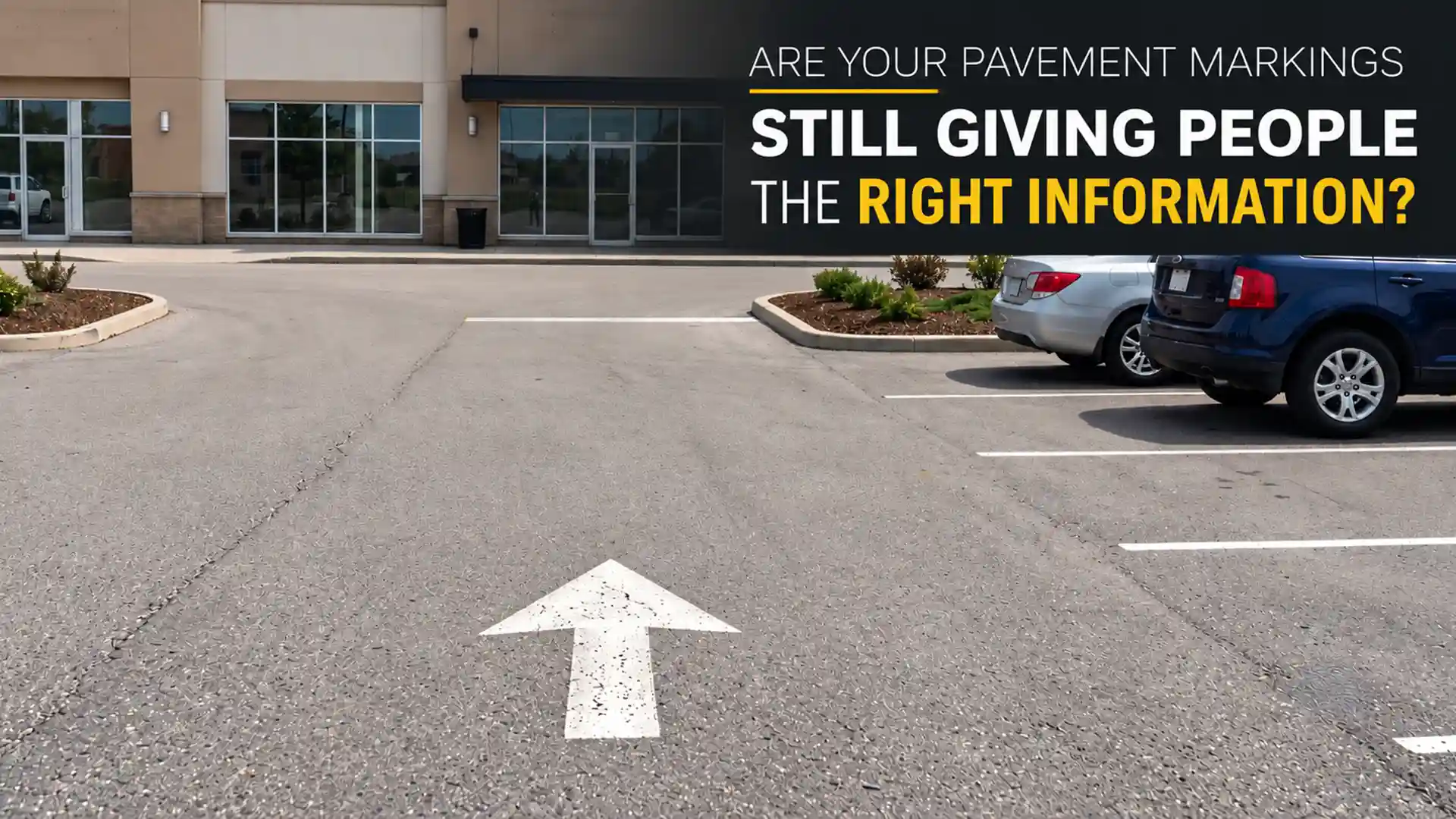
Painted lines and symbols communicate information before a customer or visitor speaks to anyone on your property. They can identify parking spaces, distinguish designated areas, indicate vehicle movement, or show where pedestrians are expected to cross. The important question is whether that information is still correct.
For property managers considering Pavement Marking in Richmond Hill, visible paint should not automatically be treated as useful paint. Easy Line Marking works with private commercial properties where existing markings may need repainting or a new layout may be required to reflect how the site is currently used.
A visible marking can still be outdated
It is easy to associate pavement maintenance with fading. If a line becomes difficult to see, repainting may seem like the obvious response.
But visibility is only one issue.
A marking can remain visible while the property around it has changed. A parking arrangement may have been reconfigured, an area may now serve a different purpose, or vehicle and pedestrian movement may no longer follow the previous layout.
Before arranging Pavement Marking in Richmond Hill, ask whether each existing marking still represents something the property needs today.
Repainting an outdated arrangement more clearly does not make the information more relevant.
See what a first-time driver sees
Regular customers and employees often learn a parking lot through repetition. They may know where to park or travel even when the Pavement Markings themselves provide limited guidance.
A first-time visitor has only the property in front of them.
Look at your parking area from that perspective. Are individual parking stalls identifiable? Do applicable directional markings correspond with the intended vehicle routes? Are designated areas still being used for the purpose indicated by their markings?
These questions help you evaluate the information communicated by the pavement rather than simply its appearance.
For Pavement Marking in Richmond Hill, the current use of the property should be the reference point.
Follow the information given to pedestrians
Drivers are not the only people interpreting markings.
Where a property includes designated pedestrian routes or crosswalks, those markings should correspond with how people actually need to move through the site.
Consider a crossing from both sides. Does it connect relevant pedestrian paths across a vehicle area? Does it lead toward a meaningful destination?
If an old crossing no longer connects the pedestrian movement intended for the property, repainting it in the same location may preserve information that is no longer useful.
When reviewing Pavement Marking in Richmond Hill, walk the routes yourself rather than judging pedestrian markings only from a vehicle.
Ask what has changed around the paint
Commercial properties do not always remain physically or operationally unchanged.
Parking sections can be reorganized. A newly paved area may require its first layout. Loading activities may change. Different sections of pavement can also be assigned new functions as property requirements evolve.
The old markings may remain after those changes.
This creates an important distinction for property managers: Does the paint need refreshing, or does the information need updating?
Easy Line Marking provides repainting of existing layouts as well as new layout design for applicable projects.
That makes the current use of the property an important consideration when planning Pavement Marking in Richmond Hill.
Decide what should stay and what should change
You do not have to treat every existing marking in the same way.
Some markings may still accurately represent the intended layout and simply require repainting. Others may identify a function the property still needs but require a different arrangement.
There may also be old markings that should not automatically become part of the new project because they no longer have a defined purpose.
This review can include parking stalls and, where relevant to the property, directional arrows, stop bars, accessible parking, crosswalks, loading-related markings, fire routes, or curb painting.
The objective is not to maximize the number of Pavement Markings Ontario property owners can place on a site. It is to identify which markings communicate information that the property actually requires.
Do not add information where none is needed
Empty asphalt does not necessarily indicate a missing marking.
A commercial parking lot can include areas where no additional line, arrow, box, or symbol is required. Adding markings without a clear function can introduce information that users do not need.
When evaluating Pavement Marking in Richmond Hill, consider what each proposed marking would tell the person seeing it.
If you cannot identify its purpose within the current property layout, it deserves further consideration before being included.
This user-focused approach keeps the project centred on useful information rather than the amount of pavement covered with paint.
Review designated areas separately
Different markings communicate different types of information.
Parking stall lines identify spaces intended for vehicles. Directional arrows, where applicable, relate to intended vehicle movement. Accessible parking areas have their own requirements. Crosswalks relate to pedestrian movement across vehicle areas, while loading-related markings may identify a separate operational function.
Because these areas communicate different things, property managers should review them individually.
For Pavement Marking in Richmond Hill, the useful question is not whether all markings look equally fresh. It is whether each type still corresponds with the purpose assigned to that part of the property.
That distinction can help you describe what actually needs attention when requesting service.
Turn your property review into a clear project
Once you know which markings remain relevant and which areas may need a different arrangement, you can communicate the project more clearly.
Useful information for Easy Line Marking can include the property address, photographs, approximate dimensions, a Google Maps or satellite view, layout drawings if available, surface type, areas requiring markings, whether the project is new or a repaint, and the preferred timeline.
An experienced estimator or project manager can assess the relevant areas, take measurements, review the layout, and discuss the property's requirements.
Preparation may include cleaning dirt, dust, and debris, removing loose material, and ensuring the pavement is dry. Required markings can then be measured and laid out using chalk or masking where necessary.
Easy Line Marking uses waterborne traffic paint and solvent-based traffic paint according to project requirements.
Make sure the pavement reflects the property you manage today
The most visible marking is not necessarily the most useful one. What matters is whether the information painted on the pavement still corresponds with the way people use your property.
Review the parking arrangement as a first-time driver. Follow pedestrian routes. Consider what has changed since the current layout was established, and avoid automatically reproducing markings that no longer have a defined purpose.
For property managers considering Pavement Marking in Richmond Hill, this creates a practical distinction between refreshing useful markings and updating an arrangement that no longer represents the site.
Easy Line Marking can assess private commercial properties and establish an appropriate scope for repainting or new layout work.
Contact Easy Line Marking to discuss your pavement marking requirements.
Phone: +1 437-577-3547
Email: info@easylinemarking.ca
Ready to Get Started?
Request a free, no-obligation quote and our team will get back to you within one business day.
- Free on-site assessment — no obligation
- Fast response — usually within 1 business day
- Work scheduled around your business hours


