
Line Markings
What should be included in a commercial line marking project?
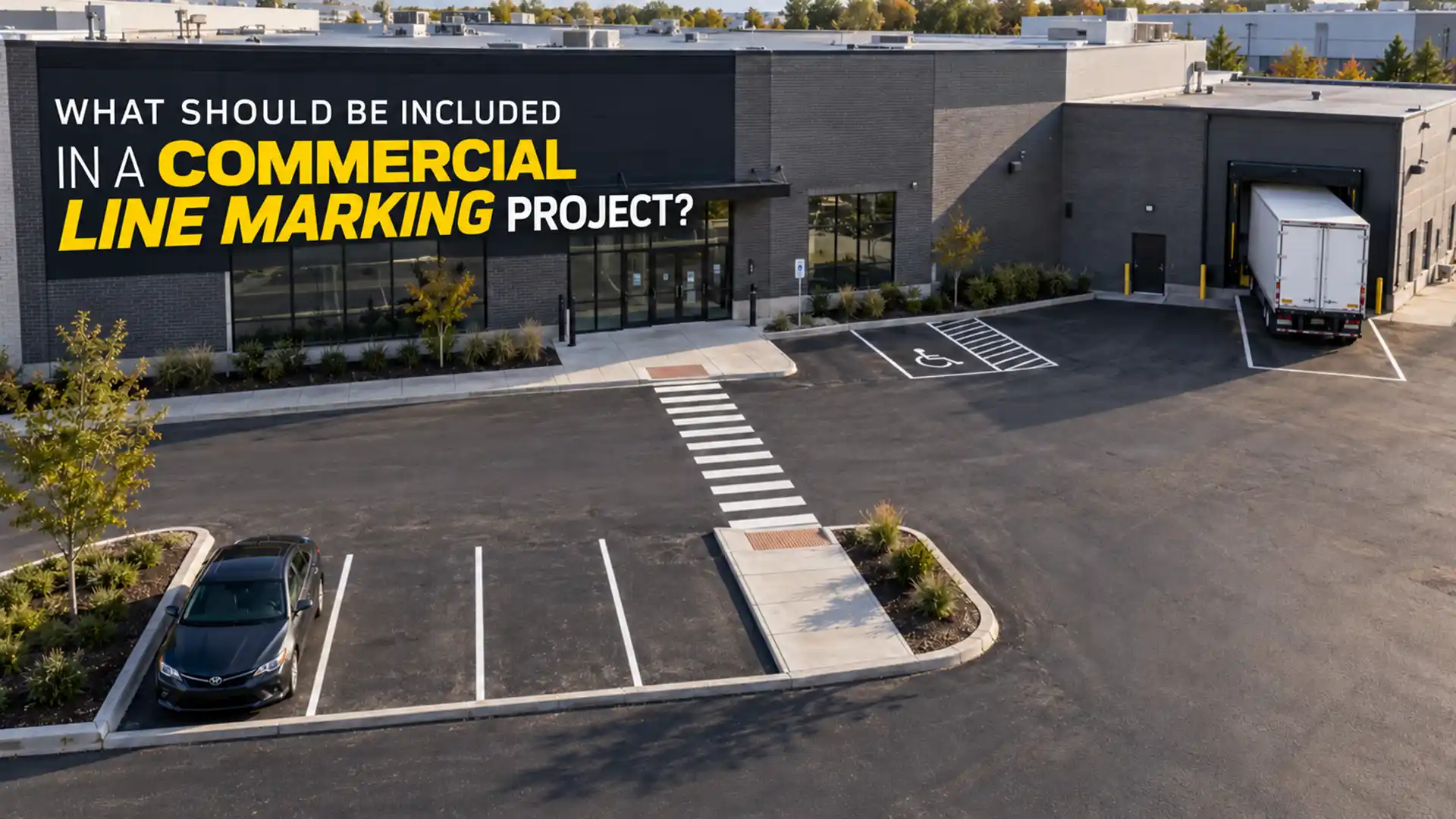
A commercial line marking project should cover the areas that need clear guidance, the markings required for each activity, surface preparation, suitable paint, and a workable schedule. Before requesting a quote, decide which existing lines need repainting and which layouts need changing. A defined scope helps prevent unnecessary painting and overlooked work.
For property managers considering Line Marking Services in Mississauga, this means reviewing parking areas, private access routes, loading spaces, and warehouse floors separately. Easy Line Marking provides repainting and new layout services for private commercial and industrial properties.
Start with how the property operates
Walk through the property during normal working hours. Note where customers park, deliveries arrive, employees walk, and equipment moves. A line that looks unnecessary on an empty site may guide an important movement during business hours. Conversely, empty pavement does not automatically need markings.
Make a simple map identifying areas with faded lines, missing boundaries, or confusing instructions. Record whether each area needs the original marking restored or a different arrangement. Photographs and approximate measurements are useful when explaining the project to a contractor. Mark areas on a simple plan and label each requested change so estimators can distinguish routine repainting from new layout work before quoting.
Define parking lot markings by purpose
Parking stalls establish individual spaces. Directional arrows indicate intended vehicle movement, while stop bars identify stopping positions. Accessible parking spaces require appropriate designated markings and associated access aisles. Loading spaces may need boundaries that distinguish them from ordinary parking.
Pedestrian crossings should connect actual walking routes across vehicle travel aisles. They should not be added in front of every entrance or painted simply to fill open pavement.
Review each proposed marking against the existing site layout. If the parking arrangement still works, repainting may be sufficient. If access, parking allocation, or vehicle movement has changed, the layout deserves another look before work begins.
Decide whether existing layouts still work
Imagine a commercial property where several customer spaces have become a regular delivery area. Repainting the old stall boundaries would preserve an arrangement that no longer matches the property's use. The manager should instead assess delivery access, nearby parking, and any markings that must change.
A revision does not necessarily mean redesigning the entire lot. One section may be adjusted while suitable markings elsewhere remain unchanged. However, old lines that conflict with new positions need attention. Ask how those markings will be treated and whether that work is included in the quotation.
Review warehouse floors separately
Warehouse marking plans should reflect real movement and storage arrangements. Depending on the facility, markings may define forklift routes, pedestrian walkways, staging areas, storage boundaries, and operational hazard zones.
Observe where employees and equipment actually travel. A walkway should connect meaningful destinations; a storage outline should correspond to an established storage location. Avoid arbitrary boxes or decorative hatching that make the floor harder to interpret.
If racking, receiving activities, or equipment locations have changed, confirm the proposed layout with the people responsible for operations before painting. The goal is a clear working arrangement, not the maximum possible number of lines.
Include loading areas and private access routes
Loading areas often have different requirements from customer parking. Check where delivery vehicles enter, manoeuvre, stop, and leave. Review whether parked vehicles obstruct access or whether existing boundaries misrepresent the designated loading space.
Private access routes may also need directional guidance or stopping positions. Only include markings that match actual vehicle movements. Where accessibility, fire routes, or other regulated areas are involved, confirm applicable requirements with the appropriate authority or qualified professional rather than assuming a painted layout is automatically compliant.
Specify preparation and paint
A useful quotation should explain what happens before paint is applied. Dust, loose debris, moisture, and surface deterioration can affect the work. Cleaning or other preparation may be required, depending on pavement or floor conditions.
Coordinate asphalt repairs, concrete repairs, or resurfacing before arranging painting wherever possible. Otherwise, new markings could be disturbed by subsequent maintenance.
Easy Line Marking uses waterborne and solvent-based traffic paints for suitable projects. Ask which material is proposed, why it suits the surface, and what preparation is included. Do not assume the same paint or process is appropriate for every location.
Plan access and work periods
Painting can temporarily restrict parking spaces, travel aisles, or warehouse work areas. Identify which entrances, delivery routes, and pedestrian paths must remain available. Arrange vehicle removal and notify tenants or employees about affected sections.
Phased work may be possible if separate areas can be closed without blocking essential access. It is not always practical when multiple sections depend on one shared aisle. Discuss scheduling constraints before approving the quotation.
Ask how reopening will be confirmed. Drying and return-to-use conditions depend on the material, weather, surface, and application circumstances; a universal reopening time should not be assumed.
Compare quotations using the same scope
Before comparing prices, check that each proposal identifies the work areas, marking types, approximate quantities, layout requirements, materials, preparation, and scheduling arrangements. Confirm whether treatment of outdated markings and any additional repairs are included or excluded.
A cheaper quotation may cover fewer markings or less preparation. Clear descriptions make it easier to understand the difference and avoid surprises after work begins.
For Line Marking Services in Mississauga, provide the property address, photographs, approximate dimensions, and details of existing markings. Explain any planned layout changes, operational restrictions, and upcoming pavement work. A site assessment may be appropriate where the arrangement is complex.
Inspect the finished work
Once painted areas are ready for use, compare the markings with the agreed layout. Check stall boundaries, arrows, designated areas, pedestrian routes, and warehouse boundaries. Confirm that previous lines do not create conflicting instructions and that relevant users understand any changes.
Keep photographs and a record of the completed scope for future maintenance decisions. Different areas may wear at different rates, so inspect conditions rather than relying on a fixed repainting interval.
Request a project-specific quote
Good line marking begins with an accurate understanding of the property, not a standard list of lines to paint. Identify the purpose of each marking, agree on necessary layout changes, and clarify preparation and access before booking.
Easy Line Marking can discuss commercial parking and Warehouse Marking requirements in Mississauga. To request a quote, call (437) 577-3547, email info@easylinemarking.ca.
Ready to Get Started?
Request a free, no-obligation quote and our team will get back to you within one business day.
- Free on-site assessment — no obligation
- Fast response — usually within 1 business day
- Work scheduled around your business hours


