
EV Charging
The hidden parking mistake that frustrates EV drivers every day
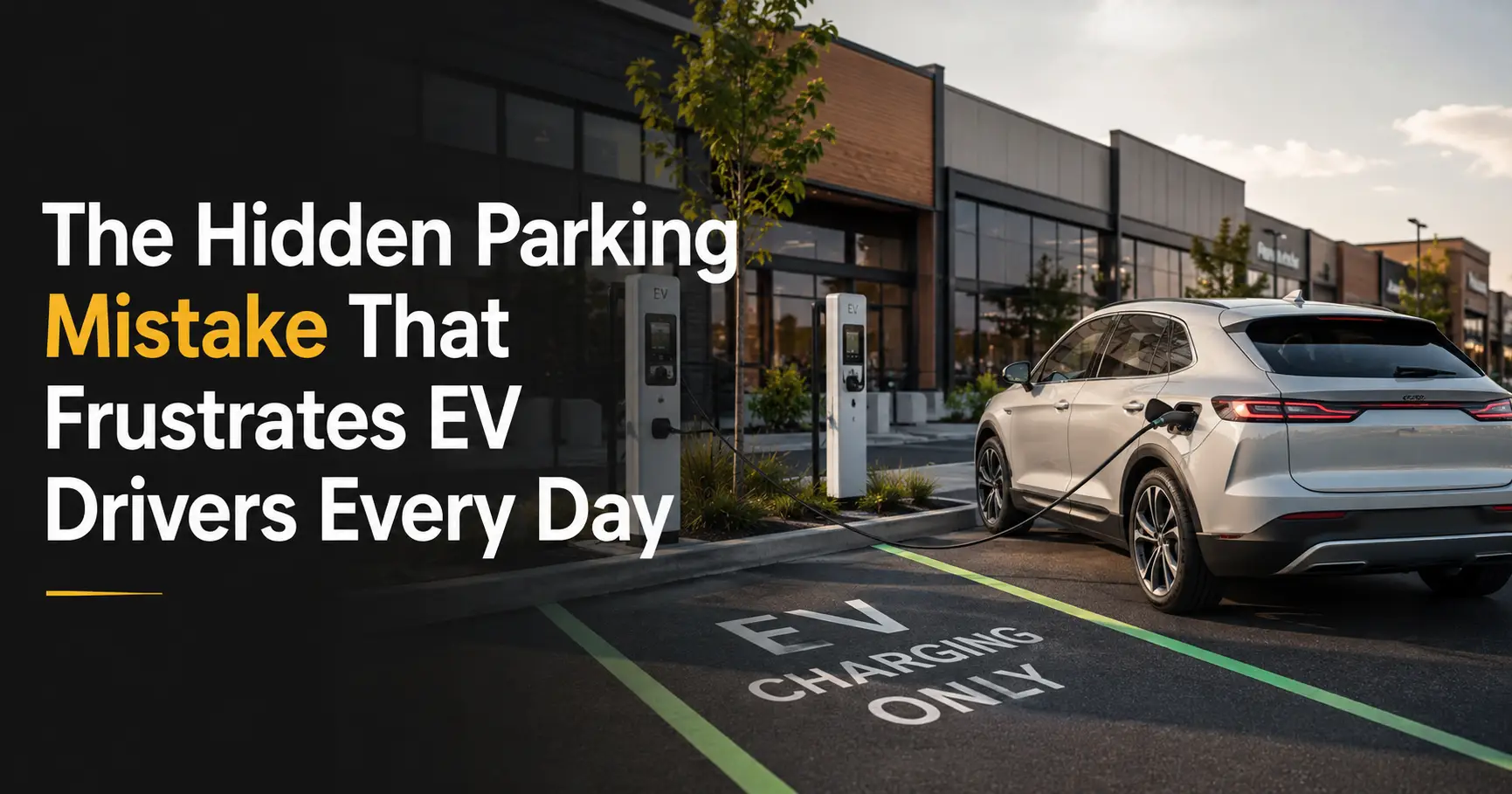
Installing an EV charger does not automatically create a functional charging space. Drivers need to recognize where charging bays begin, understand who can use them, and identify them before reaching the parking area. Easy Line Marking has found that unclear pavement markings often create more frustration than the charging equipment itself. This is why EV Charging Parking Space Marking helps commercial properties improve parking organization, charger accessibility, and the overall visitor experience.
Drivers decide where to park before they see the charger
Most drivers begin searching for parking as soon as they enter a property.
Electric vehicle owners behave the same way. They scan for available spaces and visual cues that indicate where charging stations are located. If the parking lot provides little guidance, drivers often circle the property before finding the charger.
Easy Line Marking frequently works with shopping centres, office buildings, hotels, and condominium communities where charging equipment is installed correctly but parking areas remain confusing. The charger itself is visible once drivers arrive nearby, but reaching it can be unnecessarily difficult.
Many EV Charging Parking Space Marking projects are completed because property managers want drivers to identify charging areas immediately after entering the site.
Charging spaces serve a different purpose than ordinary parking
A standard parking space simply accommodates a parked vehicle.
A charging space has another responsibility. It supports vehicles that need access to charging equipment while encouraging efficient turnover for other EV drivers waiting to charge.
Easy Line Marking encourages property owners to view charging bays as operational spaces rather than ordinary parking stalls. They should remain easy to identify, simple to access, and clearly separated from standard parking.
When that distinction becomes unclear, confusion often follows. Conventional vehicles may occupy charging bays, while EV drivers waste time searching for available chargers.
This practical difference is one reason EV Charging Parking Space Marking has become increasingly important across commercial properties.
Small visibility issues create larger operational problems
Most parking problems do not begin with major mistakes.
Instead, they develop through small moments of uncertainty. Drivers hesitate while searching for charging stations. Visitors stop unexpectedly to read signs. Vehicles occupy spaces without realizing they are reserved for charging.
Easy Line Marking has observed that these situations often disappear after pavement markings are refreshed because drivers receive clearer guidance before making parking decisions.
Good markings reduce unnecessary hesitation and help parking lots operate more efficiently without changing the physical layout.
Case study: Office complex charging area improvement
Problem
An office complex introduced multiple EV charging stations to support employees and visitors. Although the chargers functioned properly, property management received regular complaints because non-electric vehicles frequently occupied charging spaces.
Solution
Easy Line Marking reviewed vehicle circulation before refreshing charging space markings, directional guidance, and parking boundaries around the charging area.
Outcome
Drivers identified charging spaces much earlier, incorrect parking decreased, and employees reported a more reliable charging experience throughout the workweek.
Field observation
Easy Line Marking frequently notices that charging stations themselves rarely create confusion.
The surrounding parking area usually does.
Many properties invest in modern charging equipment while leaving existing pavement markings unchanged. Drivers entering the parking lot see rows of similar parking spaces with little indication that charging bays are available nearby.
Once charging spaces become visually distinctive, navigation improves almost immediately. Drivers make parking decisions sooner, reducing unnecessary circulation through the parking lot.
Charging areas influence customer perception
Businesses install EV charging stations for several reasons.
Some want to attract customers who drive electric vehicles. Others want to support sustainability initiatives or improve convenience for employees and tenants.
Regardless of the motivation, visitors often judge the quality of the charging experience before plugging in. If finding the charger feels confusing, the overall experience becomes less positive.
Easy Line Marking has found that clearly marked charging areas contribute to a more organized property while reinforcing the impression that the business has planned the parking experience carefully.
Many EV Charging Parking Space Marking projects are completed as part of broader property improvement initiatives rather than standalone maintenance work.
Planning for future demand
Electric vehicle ownership continues to grow throughout Ontario.
As more drivers rely on charging stations, competition for charging spaces will naturally increase. Parking layouts that work today may require adjustments as charging demand rises.
Easy Line Marking recommends reviewing charging areas during annual property inspections alongside accessible parking, pedestrian crossings, fire routes, and directional arrows. Markings should reflect current traffic patterns while remaining easy for first-time visitors to understand.
Properties that review charging layouts regularly are often better prepared for future demand than those waiting until parking complaints become common.
This forward-looking approach helps ensure EV Charging Parking Space Marking continues supporting both drivers and property managers as electric vehicle adoption expands.
Conclusion
Installing charging equipment is an important investment, but it represents only part of the customer experience.
Drivers should be able to locate charging spaces quickly, understand how they are intended to be used, and move through the parking area with confidence. Through projects completed across Ontario, Easy Line Marking has found that EV Charging Parking Space Marking improves parking organization, charger accessibility, and traffic flow while helping commercial properties provide a better experience for today's growing community of electric vehicle owners.
FAQ
What is EV charging parking space marking?
EV charging parking space marking uses pavement markings to identify parking spaces reserved for electric vehicle charging.
Why is EV charging parking space marking important?
It improves charger visibility, parking organization, traffic flow, and helps reduce confusion for both EV and conventional vehicle drivers.
Where are EV charging spaces commonly installed?
They are commonly found at shopping centres, office buildings, hotels, condominiums, healthcare facilities, retail plazas, and commercial properties.
How often should EV charging spaces be reviewed?
Easy Line Marking recommends annual inspections and repainting whenever markings begin affecting visibility or parking efficiency.
Why is EV Charging Parking Space Marking important?
Clearly marked charging spaces help drivers identify available chargers quickly while supporting better parking organization and customer satisfaction.
Contact Easy Line Marking
Easy Line Marking helps commercial properties create safer, more organized, and more professional environments through clear and durable pavement markings.
Easy Line Marking helps shopping centres, office buildings, hotels, condominiums, industrial facilities, and commercial properties improve parking organization, charger accessibility, and traffic flow through practical marking systems designed around real operational needs.
Phone: (437) 577-3547
Email: info@easylinemarking.ca
Ready to Get Started?
Request a free, no-obligation quote and our team will get back to you within one business day.
- Free on-site assessment — no obligation
- Fast response — usually within 1 business day
- Work scheduled around your business hours


