
Industrial Marking
Why do growing facilities suddenly need new industrial markings?
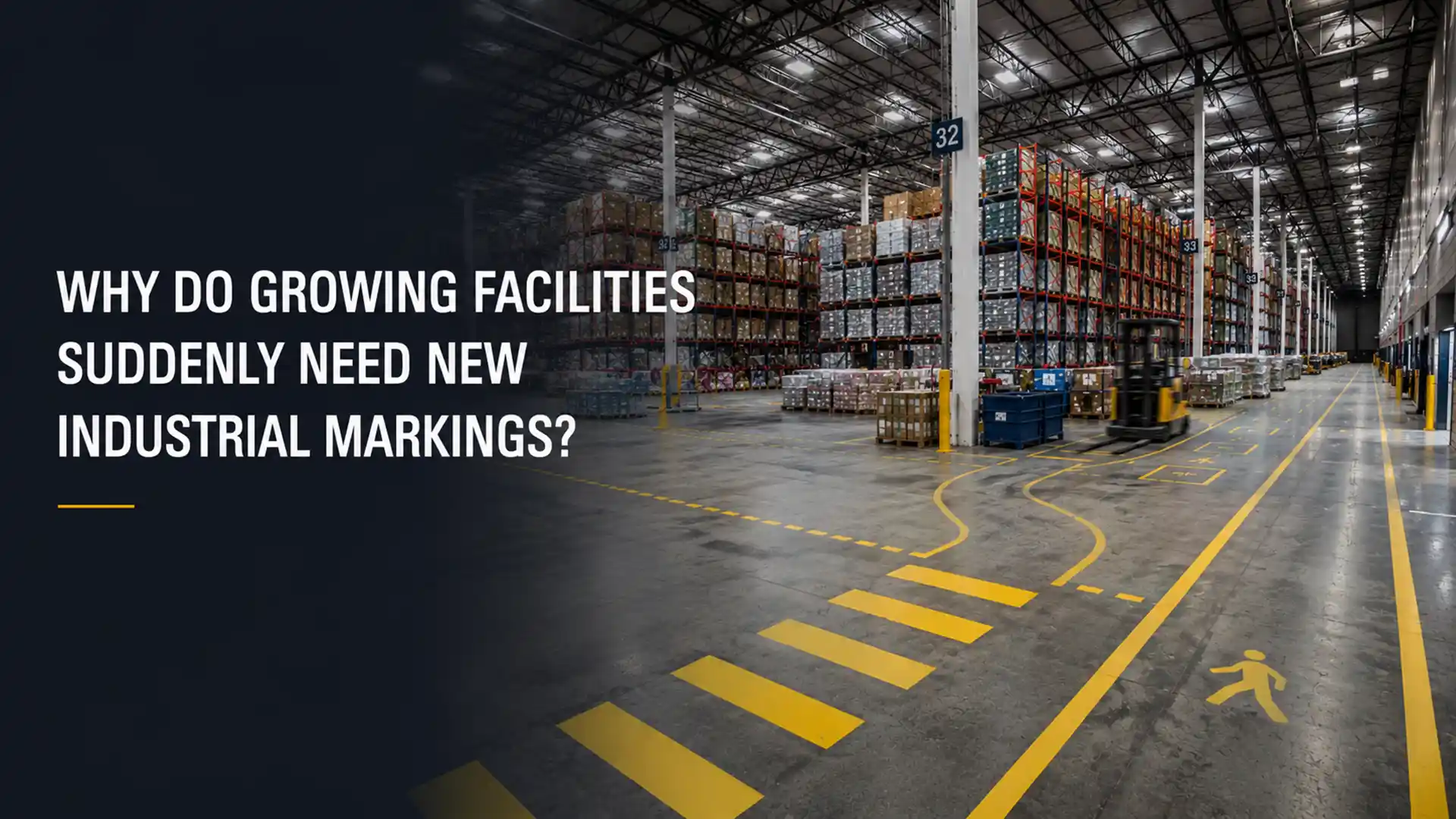
Many facility managers assume line painting becomes necessary only when markings start to disappear. Easy Line Marking often finds a different issue. The paint may still be visible, but the layout no longer supports how the facility operates.
As businesses grow, employee movement changes, storage areas expand, and equipment traffic increases. A layout that worked five years ago may now create confusion and inefficiencies. This is why Industrial Line Painting Milton projects are often focused on improving workplace organization, traffic flow, and operational safety rather than simply refreshing old paint.
Growth changes the way facilities function
A facility rarely becomes disorganized overnight.
Instead, changes happen gradually. New equipment arrives. Additional inventory requires more storage space. Temporary work areas become permanent. Departments expand into areas that were originally designed for other purposes.
Easy Line Marking frequently works with facilities that still have visible markings but struggle with operational flow. Employees adapt by creating new routes and workarounds that may not align with the original layout.
Many Industrial Line Painting Milton projects begin after managers realize that the facility has evolved while the marking system has remained exactly the same.
The biggest problems are usually found at intersections
One common misconception is that long traffic lanes create the greatest risk.
In reality, Easy Line Marking often finds that the most challenging areas are where different activities meet. Forklift routes cross pedestrian pathways. Shipping areas connect with production zones. Employees move through spaces that were never designed for high traffic volumes.
These locations require constant decision-making from workers and equipment operators.
When markings become unclear or outdated, confusion often starts at these transition points. This is one reason Industrial Line Painting Milton projects frequently focus on improving visibility and organization around critical intersections rather than repainting every area equally.
Case study: Improving traffic flow in a manufacturing facility
Problem
A manufacturing facility experienced recurring congestion near its production support area. Forklifts, employees, and material carts were all using the same travel routes during busy periods.
Supervisors noticed delays, near misses, and unnecessary interruptions throughout the day.
Solution
Easy Line Marking reviewed how employees and equipment actually moved through the facility. Dedicated walkways were improved, staging areas were reorganized, and traffic routes were adjusted to reduce crossing conflicts.
Outcome
The facility reported smoother movement, improved organization, and fewer disruptions during production shifts. Employees found it easier to navigate the space safely and efficiently.
Field observation
Easy Line Marking has observed that industrial markings rarely wear evenly across a facility.
The first areas to show significant deterioration are often forklift turning points, dock approaches, and production entrances. These locations experience constant traffic, directional changes, and concentrated activity throughout the day.
Interestingly, many facilities focus on repainting long sections of traffic lanes while overlooking these high-impact areas.
In practice, workers often judge the effectiveness of an entire traffic system based on a few critical locations. Maintaining visibility in these zones usually delivers a greater operational benefit than repainting low-traffic areas first.
More markings do not always create better organization
Some facilities respond to operational challenges by adding more lines, symbols, and visual indicators.
Unfortunately, this approach can create additional confusion.
Easy Line Marking has worked with facilities where excessive markings competed for attention and made navigation more difficult. Effective industrial markings should communicate clearly and support workplace behavior.
The goal is not to cover every available surface with paint. The goal is to help employees understand where they should walk, where equipment should travel, and where materials should be stored.
Many successful Industrial Line Painting Milton projects focus on simplifying layouts rather than making them more complicated.
Why facility managers should review markings before repainting
One of the most valuable questions a facility manager can ask is not whether markings are still visible.
The better question is whether they are still effective.
Easy Line Marking often recommends reviewing traffic patterns before repainting begins. Employees may be ignoring certain routes because operational needs have changed. Storage zones may no longer support inventory volumes. Walkways may no longer reflect actual movement patterns.
When facilities evaluate how the space is being used before repainting, the results are usually far more effective. This approach helps ensure markings support current operations rather than preserving outdated layouts.
Industrial markings influence more than safety
Safety is often the primary reason organizations invest in markings, but it is not the only benefit.
Clear visual guidance can improve productivity, reduce confusion, support employee training, and create a more organized environment. New employees can navigate the facility more easily. Visitors and contractors can identify designated routes without constant supervision.
Easy Line Marking has seen many facilities improve operational efficiency simply by creating clearer visual communication throughout the workplace.
This is one reason Industrial Line Painting Milton continues to be an important investment for warehouses, manufacturing facilities, logistics centers, and industrial properties.
Conclusion
Industrial markings play a critical role in how facilities operate every day. They influence traffic flow, workplace organization, employee behavior, and operational efficiency.
Through experience working with industrial facilities across Ontario, Easy Line Marking has found that the most effective layouts evolve alongside the business itself. Investing in Industrial Line Painting Milton is not simply about maintaining appearance. It is about creating a safer, more organized, and more efficient environment that supports long-term operational success.
FAQ
What is industrial line painting?
Industrial line painting uses visual markings to define traffic routes, walkways, storage zones, staging areas, and operational spaces within industrial facilities.
Why is industrial line painting important?
It helps improve workplace organization, traffic flow, safety, and operational efficiency.
How often should industrial markings be reviewed?
Easy Line Marking recommends reviewing markings annually and after significant operational changes or facility expansions.
Can industrial line painting improve productivity?
Yes. Clear markings reduce confusion, improve navigation, and help employees move more efficiently throughout a facility.
Why is Industrial Line Painting Milton important for growing facilities?
As facilities expand, updated markings help ensure traffic routes and operational zones continue to support workplace needs effectively.
Contact Easy Line Marking
Easy Line Marking helps industrial facilities create safer, more organized, and more efficient working environments through clear and durable visual marking systems.
Easy Line Marking helps warehouses, manufacturing facilities, and distribution centers improve traffic flow, workplace organization, and operational clarity through strategically planned markings.
Phone: (437) 577-3547
Email: info@easylinemarking.ca
Ready to Get Started?
Request a free, no-obligation quote and our team will get back to you within one business day.
- Free on-site assessment — no obligation
- Fast response — usually within 1 business day
- Work scheduled around your business hours