
Traffic Flow & Site Safety
Why Do Employees Stop Following Floor Markings even when they’re Visible?
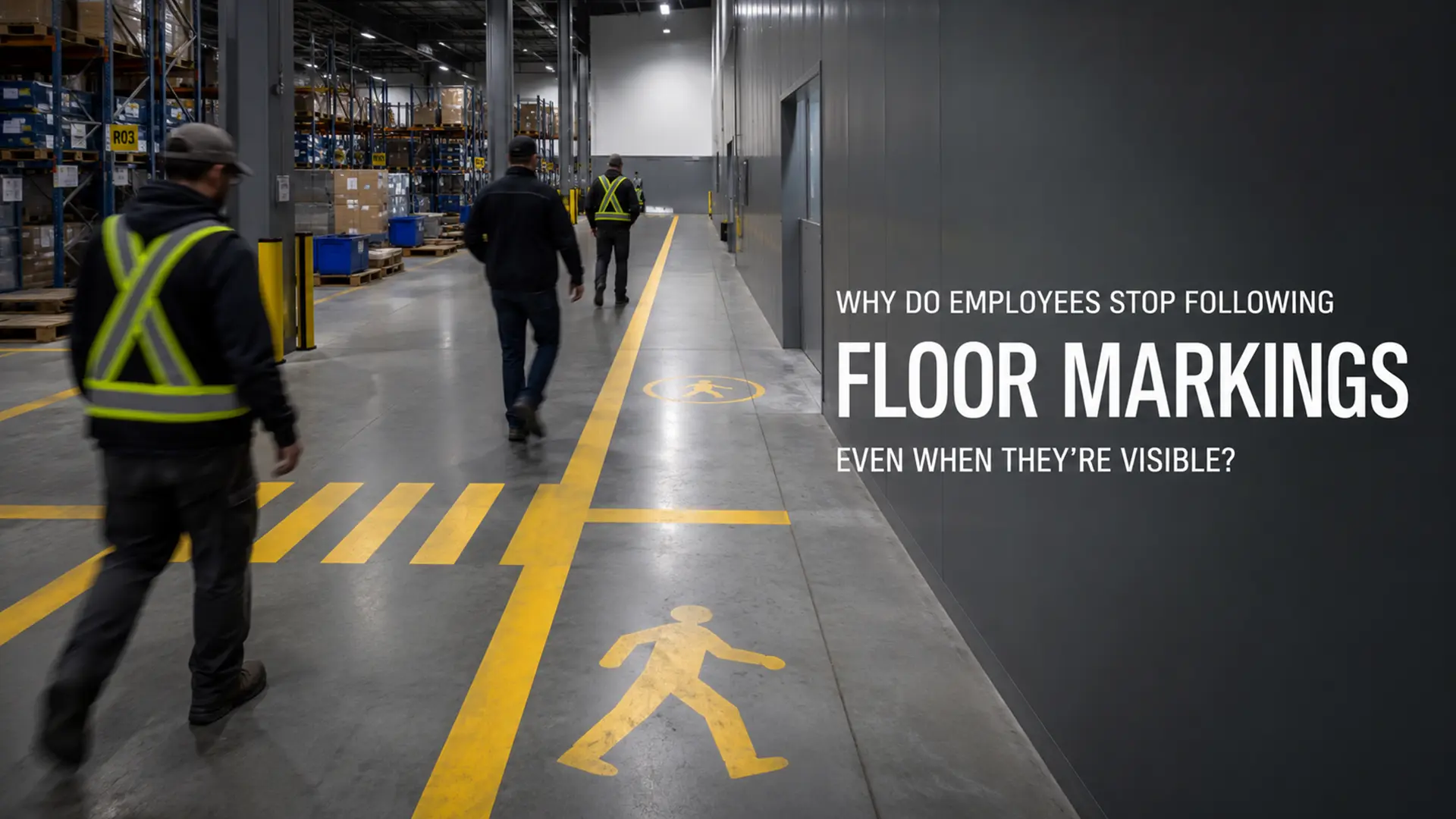
Many facility managers assume floor markings become a problem only after they fade. In reality, markings can lose their effectiveness long before they disappear.
Employees become familiar with shortcuts. Equipment routes evolve. Storage locations shift. Over time, the original layout may no longer match how the facility actually operates.
This is why Safety Floor Marking Oshawa projects are often about more than repainting worn lines. The most successful facilities use floor markings to support workplace behavior, improve traffic flow, separate pedestrians from equipment, and create an environment where safety becomes easier to follow every day.
The Warehouse Looked Organized Until Shift Change
A warehouse can appear perfectly organized during a morning walkthrough. Pallets are stored correctly. Equipment is parked where it belongs. Walkways seem clear.
Then shift change happens.
Employees move between departments. Forklifts increase activity around loading areas. Temporary staff enter unfamiliar parts of the building. Suddenly, traffic patterns become very different from what management observed earlier in the day.
This is often when hidden weaknesses become visible. Many facilities discover that markings still exist but no longer guide behavior effectively. One of the most common reasons organizations invest in Safety Floor Marking Oshawa is to realign visual guidance with actual daily operations rather than relying on outdated layouts.
People Follow the Path of Least Resistance
Most workplace safety challenges are not caused by employees intentionally ignoring procedures.
People naturally choose the quickest and easiest route available. If a pedestrian walkway adds extra distance, workers may begin taking shortcuts. If staging areas are inconveniently located, materials may end up stored outside designated zones.
Over time, these habits become normal.
Well-designed markings account for real-world behavior. Instead of forcing movement patterns that employees resist, they help create routes that feel intuitive. Facilities that understand this principle often achieve much higher compliance than those relying solely on policies and training sessions.
What We Often Notice During Facility Walkthroughs
When evaluating industrial facilities, certain areas consistently reveal problems before the rest of the building.
Intersections between forklift routes and pedestrian pathways often show the earliest signs of wear. Staging zones near shipping departments become cluttered. High-traffic corners gradually lose visual clarity.
Interestingly, these locations are usually where operational pressure is highest.
Facilities considering Safety Floor Marking Oshawa improvements often discover that a small number of critical areas account for a large percentage of daily traffic conflicts. Addressing these locations first can significantly improve both safety and workflow efficiency.
Case Study: A Distribution Facility That Reduced Traffic Confusion
Problem
A growing distribution center added new storage racks over several years. While the facility expanded successfully, the original floor marking layout remained largely unchanged.
Employees frequently crossed equipment routes. Forklift operators encountered unexpected pedestrian traffic near staging areas. Supervisors spent considerable time redirecting movement throughout the facility.
Solution
The facility reviewed actual traffic patterns rather than simply repainting existing lines. Walkways were relocated, staging areas were redefined, and traffic routes were adjusted to match operational realities.
Outcome
Movement became more predictable. Employees adapted quickly because the new layout reflected how they naturally moved through the building. Supervisors reported fewer interruptions and improved workflow consistency.
Field Observation
In many warehouses, forklift lanes do not fade evenly.
The first areas to lose visibility are usually turning points, intersections, and dock approaches. Forklift tires repeatedly follow the same path, creating concentrated wear in specific locations rather than across entire lanes.
Facility managers sometimes focus on repainting long stretches of traffic routes while overlooking these high-impact zones.
In practice, employees often judge the clarity of an entire safety system based on a handful of critical intersections. When those areas remain visible, the overall facility feels more organized and easier to navigate.
The Difference between Marked Space and Managed Space
Some facilities have floor markings everywhere but still struggle with organization.
Others have fewer markings and operate extremely efficiently.
The difference is not the amount of paint on the floor. It is whether the markings actively support operations.
Successful facilities treat markings as a management tool. They review traffic flow, storage needs, equipment movement, and employee behavior before making changes. This approach often produces better results than simply refreshing existing layouts. Many Safety Floor Marking Oshawa projects become operational improvement initiatives rather than straightforward maintenance tasks.
Why Expansion Creates Hidden Safety Risks
Growth is usually viewed as a positive sign.
More inventory, additional staff, and increased production often indicate business success. However, expansion frequently introduces challenges that existing floor markings were never designed to handle.
New equipment may share space with older traffic routes. Temporary storage locations can become permanent. Employee movement patterns change as departments grow.
Organizations often discover that safety systems designed years earlier no longer reflect current conditions. This is one reason Safety Floor Marking Oshawa continues to be relevant even in facilities where markings remain visible. The issue is often layout effectiveness rather than paint condition.
A Better Question Than "When Should We Repaint?"
Many facility managers ask when markings should be refreshed.
A more useful question may be whether the markings are still influencing behavior.
If employees consistently follow designated routes, traffic flows smoothly, and operational zones remain respected, repainting may not be urgent. If confusion, shortcuts, and congestion are becoming more common, the facility may benefit from a review even if markings appear visible.
The most effective Safety Floor Marking Oshawa projects focus on workplace performance rather than appearance alone. Clear visual guidance helps employees make better decisions without requiring constant supervision.
Conclusion
The effectiveness of floor markings cannot be measured solely by visibility. A line can still be bright while failing to influence behavior.
Facilities operate best when markings reflect current workflows, support employee movement, and create clear separation between different activities. As operations evolve, visual guidance systems should evolve as well.
Organizations investing in Safety Floor Marking Oshawa often achieve more than refreshed paint. They create safer, more organized workplaces where employees, equipment operators, and visitors can move confidently through the facility.
FAQ
What is safety floor marking?
Safety floor marking uses visual lines, symbols, and operational zones to guide movement and improve workplace organization.
Why do employees stop following floor markings?
Layouts may no longer reflect real-world workflows, causing employees to create their own shortcuts and movement patterns.
How often should floor markings be reviewed?
Most facilities benefit from annual reviews, especially after operational changes or facility expansions.
Can floor markings improve warehouse efficiency?
Yes. Clear operational zones help reduce confusion, improve traffic flow, and support workplace organization.
Why is Safety Floor Marking Oshawa important for growing facilities?
As operations evolve, updated markings help maintain safety, efficiency, and clarity throughout the workplace.
Contact Easy Line Marking
We help warehouses improve safety, efficiency, and traffic flow through clearly defined floor markings and operational zones.
We help industrial facilities create safer, more organized workplaces by improving pedestrian guidance, forklift traffic management, and workplace organization through durable visual marking systems.
Phone: (437) 577-3547
Email: info@easylinemarking.ca
Ready to Get Started?
Request a free, no-obligation quote and our team will get back to you within one business day.
- Free on-site assessment — no obligation
- Fast response — usually within 1 business day
- Work scheduled around your business hours


