
Repainting Pavement Marking
What should you check before repainting pavement markings on a commercial property?
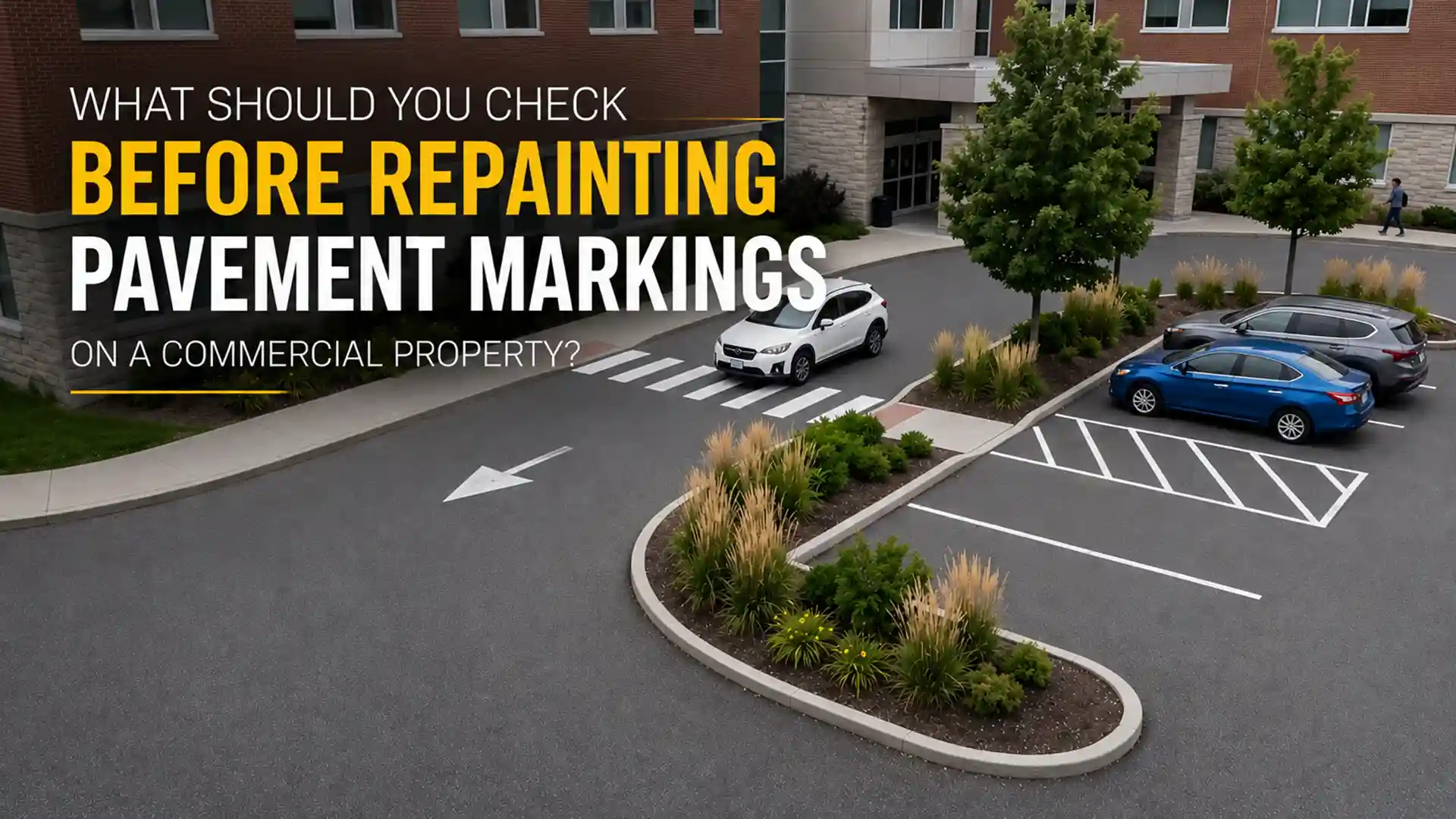
When pavement markings start to fade, repainting can seem like the obvious next step. But faded paint is only one part of the decision. The existing layout may still work perfectly well, or the way the property is used may have changed since those lines were first installed.
That is why property managers planning Commercial Pavement Marking in Pickering should review the site before automatically copying every existing line. A few practical checks can help determine whether the project is straightforward maintenance or whether some areas need a new layout.
Easy Line Marking can repaint existing markings and design new layouts for commercial properties. Knowing which approach the property needs is the important first decision.
1. Are the markings faded, or is the layout outdated?
Start by separating two different problems.
Faded paint is mainly a maintenance issue. If the parking spaces and other pavement markings are still positioned appropriately, repainting the existing layout may be enough.
An outdated layout is different. Changes to the property or how the space is used can mean that simply tracing old markings does not address current requirements.
Walk through the property and ask a simple question: if every faded line became clearly visible again tomorrow, would the layout still make sense?
If the answer is yes, repainting may be appropriate. If not, the layout deserves further review before painting begins.
2. Which markings actually need attention?
Avoid judging the entire property based on one badly worn section.
Different areas can deteriorate at different rates. Some markings may remain clear while others have become difficult to see. There may also be areas where markings are no longer relevant to how the property operates.
Create a basic record of what you see.
Note the areas where markings have faded, disappeared, or become unclear. Photographs can be useful for documenting these locations and sharing them when requesting an estimate.
This simple check gives the contractor more useful information than saying only that the property "needs new lines."
3. Has anything changed since the current layout was created?
A commercial property does not always operate exactly as it did when its pavement markings were originally installed.
Before arranging Commercial Pavement Marking in Pickering, consider whether the current requirements still correspond with the existing arrangement.
The question is not whether an older layout is automatically wrong. It is whether it still reflects what the property needs today.
If nothing meaningful has changed, preserving an effective layout can be sensible. If the property has been reconfigured or the required parking arrangement has changed, new layout planning may deserve consideration.
Easy Line Marking handles both situations rather than assuming repainting is always the answer.
4. Can you clearly identify the existing layout?
Sometimes the condition of the markings makes this decision less obvious.
If enough of the existing lines remain visible, an estimator may be able to review the arrangement and determine what is currently established. When markings are heavily worn or sections are difficult to interpret, measurements and additional layout work may be necessary.
Do not guess where missing lines used to be.
A site assessment can help determine what can reasonably be followed and what needs to be measured or planned again.
This is particularly important when the finished markings need to create a consistent arrangement across the property.
5. What does the pavement look like?
The markings are only one part of what should be observed. Look at the surface receiving the paint as well.
Easy Line Marking assesses pavement or floor conditions as part of project planning. Confirmed preparation may include cleaning dirt, dust, and debris, removing loose material, and ensuring the surface is dry.
Markings also need to be measured and laid out, with masking or chalk guide lines used where required.
The exact preparation depends on the site. This is why surface conditions should be reviewed instead of assuming that every commercial pavement requires an identical process.
Easy Line Marking uses waterborne traffic paint and solvent-based traffic paint for its confirmed line painting work.
6. Which questions require a professional site assessment?
A property walk-through is useful, but it does not mean the property manager has to make every technical or layout decision alone.
Some information is better established during an on-site assessment.
An experienced Easy Line Marking estimator or project manager can review the existing layout, pavement markings, traffic flow, surface condition, measurements, accessibility and safety requirements, and operational needs.
This assessment can help answer a key question behind Commercial Pavement Marking in Pickering:
Are we restoring an existing arrangement, or planning something different?
That distinction gives the rest of the project a clearer direction.
7. What should you document before requesting a quote?
You can make the initial conversation more useful without creating a detailed specification yourself.
Gather the information you already have, such as:
- Property address
- Approximate dimensions
- Current photographs
- Google Maps or satellite view
- Existing layout, if available
- Type of markings required
- Surface type
- Whether you expect repainting or new markings
- Preferred project timeline
Photos are particularly useful when they show both the overall property and specific areas of concern.
If you are unsure about something, leave it for discussion rather than guessing. Measurements and site assessment can clarify details that cannot be established accurately beforehand.
8. Are you about to repaint a problem instead of solving it?
This is the final check before moving forward.
Imagine the existing lines freshly painted in exactly their current positions. If that would give the property the arrangement it needs, repainting is a logical direction.
If you would immediately want certain markings moved, added, or reconsidered, discuss those requirements before the old layout is reproduced.
That does not mean every older parking lot requires redesign. In many cases, maintaining an established arrangement is exactly what is needed.
The purpose of the check is simply to distinguish worn paint from a changed requirement.
Make the repainting decision before the paint arrives
A commercial pavement marking project becomes easier to define once you know whether you are preserving an existing layout or reconsidering part of it.
For property managers researching Commercial Pavement Marking in Pickering, the useful first step is therefore not choosing paint or counting every faded line. It is understanding what still works on the property and what, if anything, needs to change.
Easy Line Marking can inspect the site, measure the areas involved, review existing markings and pavement conditions, and discuss whether repainting or a new layout is appropriate.
For a Commercial Pavement Marking project in Pickering, provide the available site information to begin defining the scope.
Phone: +1 437-577-3547
Email: info@easylinemarking.ca
Ready to Get Started?
Request a free, no-obligation quote and our team will get back to you within one business day.
- Free on-site assessment — no obligation
- Fast response — usually within 1 business day
- Work scheduled around your business hours


