
Line Markings
What should determine where lines belong on a commercial property?
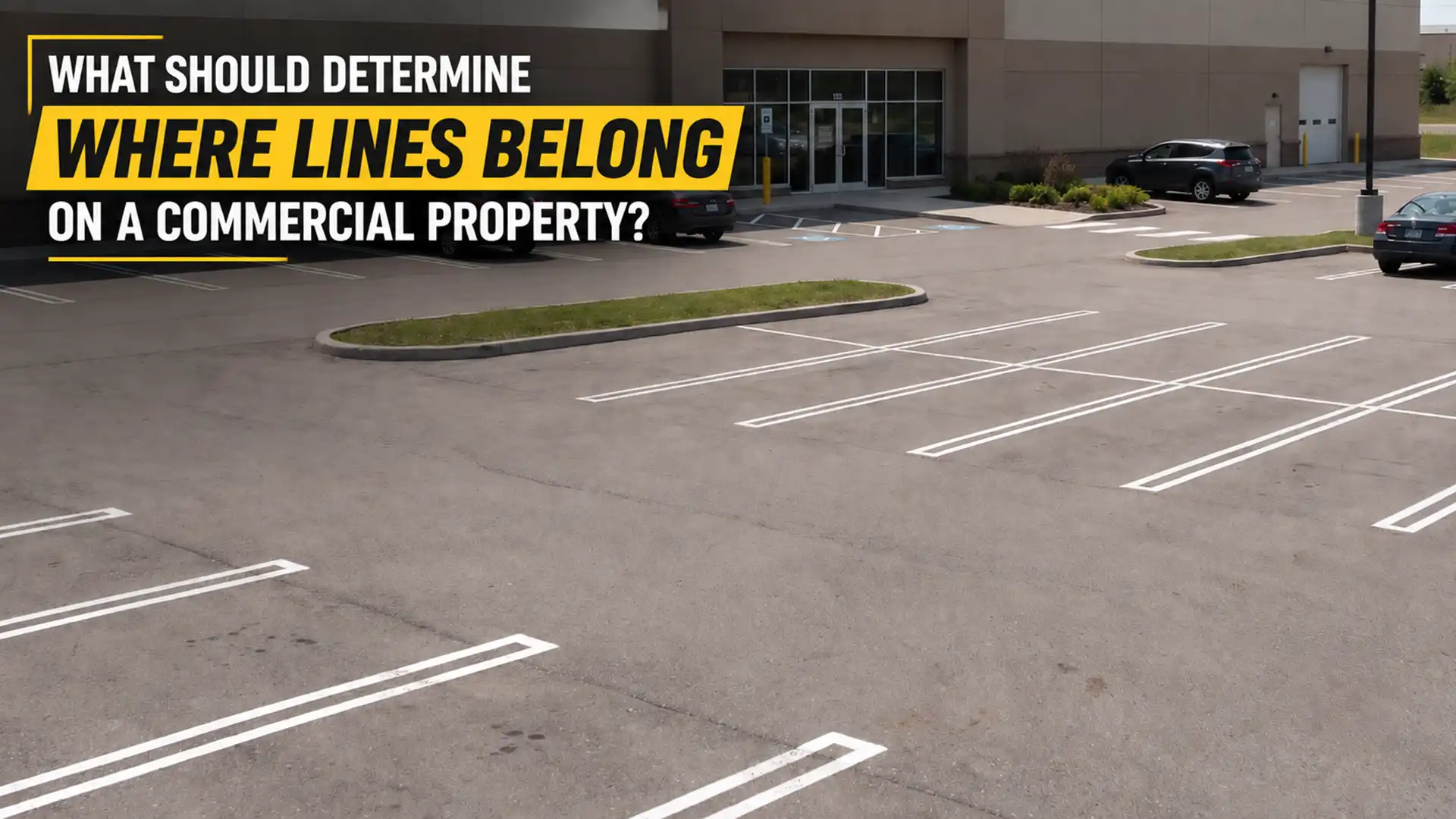
A commercial property may include parking spaces, pedestrian routes, loading areas, vehicle lanes, storage sections, and operational zones. Each area performs a different function, so its markings should reflect how that space is actually used. For businesses considering Line Painting Ontario, the objective should be purposeful markings rather than simply adding paint wherever open space is available.
Easy Line Marking provides marking services for private commercial and industrial properties. Whether the project involves a parking lot, warehouse, industrial floor, or private vehicle area, every marking should correspond with an identifiable requirement.
Every painted line should have a purpose
Before deciding where paint belongs, consider what the line is expected to communicate.
A parking stall boundary identifies an individual parking space. A warehouse walkway defines an area intended for pedestrian movement. A forklift lane identifies a designated vehicle route, while a staging outline assigns floor space to a specific operational activity.
This function-first approach is important when planning Line Painting Ontario because different areas should not receive markings simply for visual consistency. Where no boundary, route, or designated area is required, leaving the surface unmarked may be appropriate.
Parking areas need an established arrangement
Parking Lot Line Painting begins with understanding the intended parking arrangement.
If an existing layout still meets the property's requirements, it may provide the basis for repainting. If the property has been newly paved or reconfigured, a new layout may need to be established.
Easy Line Marking provides both repainting and new layout design for applicable projects. Measurements and property requirements help determine where parking stall boundaries and other relevant markings belong.
For Line Painting Ontario, existing paint should not automatically determine the next layout. The current requirements of the property should guide the work.
Vehicle routes serve a different function
A parking space and a vehicle travel area may exist on the same property, but they perform different jobs.
Private commercial and industrial properties can include internal vehicle routes connecting parking sections, entrances, loading areas, or other parts of the site. Markings in these areas should correspond with the intended private-property layout.
Easy Line Marking focuses on private commercial and industrial properties rather than municipal streets and public highways. This distinction keeps Line Painting Ontario projects connected to the requirements of the private site.
Pedestrian markings should lead somewhere
Pedestrian markings should correspond with genuine movement requirements.
Inside a warehouse, for example, a designated walkway may connect workstations, operational areas, emergency exits, or other relevant destinations. A walkway should have a practical relationship with how people move through the facility.
Crossings also need a reason to exist. A marked crossing is relevant where an actual pedestrian route needs to intersect a vehicle travel lane. It should not be added merely to fill an open section of floor.
When planning Line Painting Ontario, the destination and purpose of a pedestrian route should therefore be considered before its markings are established.
Define storage, staging, and equipment areas
Warehouse markings are not limited to movement routes.
Storage aisles, pallet staging areas, equipment parking, loading areas, shipping and receiving sections, workstations, and safety zones may all require defined floor areas depending on the facility.
A staging boundary should correspond with the space assigned to staging. An equipment parking area should reflect where equipment is actually intended to remain.
This is where Line Painting becomes part of a wider operational layout. The markings distinguish assigned spaces, while the facility's requirements determine what those spaces are for.
For Line Painting Ontario, the goal is not maximum floor coverage. It is to identify boundaries relevant to how the facility operates.
Consider where different activities meet
Some areas require particular attention because two functions come together.
A pedestrian walkway might run beside a forklift lane. A vehicle route may connect with a loading area. A staging section may sit alongside an active movement zone.
The relationship between these areas should be understood before marking positions are established.
Easy Line Marking can review existing layouts, operational requirements, relevant measurements, and site conditions during an assessment. This helps translate the property's intended functions into a defined marking scope.
A connected approach to Line Painting Ontario considers how neighbouring areas work together rather than treating every painted line as an isolated feature.
Blank space does not always need paint
An empty surface is not automatically an unfinished surface.
Adding unnecessary arrows, boxes, lanes, crossings, or boundaries can introduce markings without a genuine property function. Effective Pavement Markings and warehouse floor markings should communicate something useful about the space.
Property managers can instead identify where parking, movement, storage, pedestrian access, loading, or other designated activities need clear boundaries.
Areas without a defined marking requirement can remain unmarked. This keeps the project focused on what the property actually needs.
Establish positions before application
Once the required functions are clear, the markings need to be positioned on the actual property.
Easy Line Marking site inspections are typically performed by an experienced estimator or project manager. The assessment may include reviewing existing markings and layout, measuring relevant areas, examining surface conditions, and considering accessibility, safety, and operational requirements.
For Line Painting Ontario, these details help establish an appropriate scope before paint is applied.
Preparation may include cleaning dirt, dust, and debris, removing loose materials, and ensuring the surface is dry. Required markings can then be measured and laid out, with masking or chalk guide lines used where necessary.
Easy Line Marking uses waterborne traffic paint and Solvent-Based Traffic Paint according to project requirements and site conditions.
Make the property function the starting point
A well-defined marking project begins with understanding what each part of the property is supposed to do. Parking areas, pedestrian routes, forklift lanes, staging zones, loading sections, and equipment areas all require different considerations.
For businesses seeking Line Painting Ontario, Easy Line Marking can assess private commercial and industrial properties, establish the relevant marking scope, and provide new layout or repainting services based on the site's requirements.
Contact Easy Line Marking to discuss your property marking requirements.
Phone: +1 437-577-3547
Email: info@easylinemarking.ca
Ready to Get Started?
Request a free, no-obligation quote and our team will get back to you within one business day.
- Free on-site assessment — no obligation
- Fast response — usually within 1 business day
- Work scheduled around your business hours


