
Warehouse Safety
How can you tell when warehouse floor markings need attention?
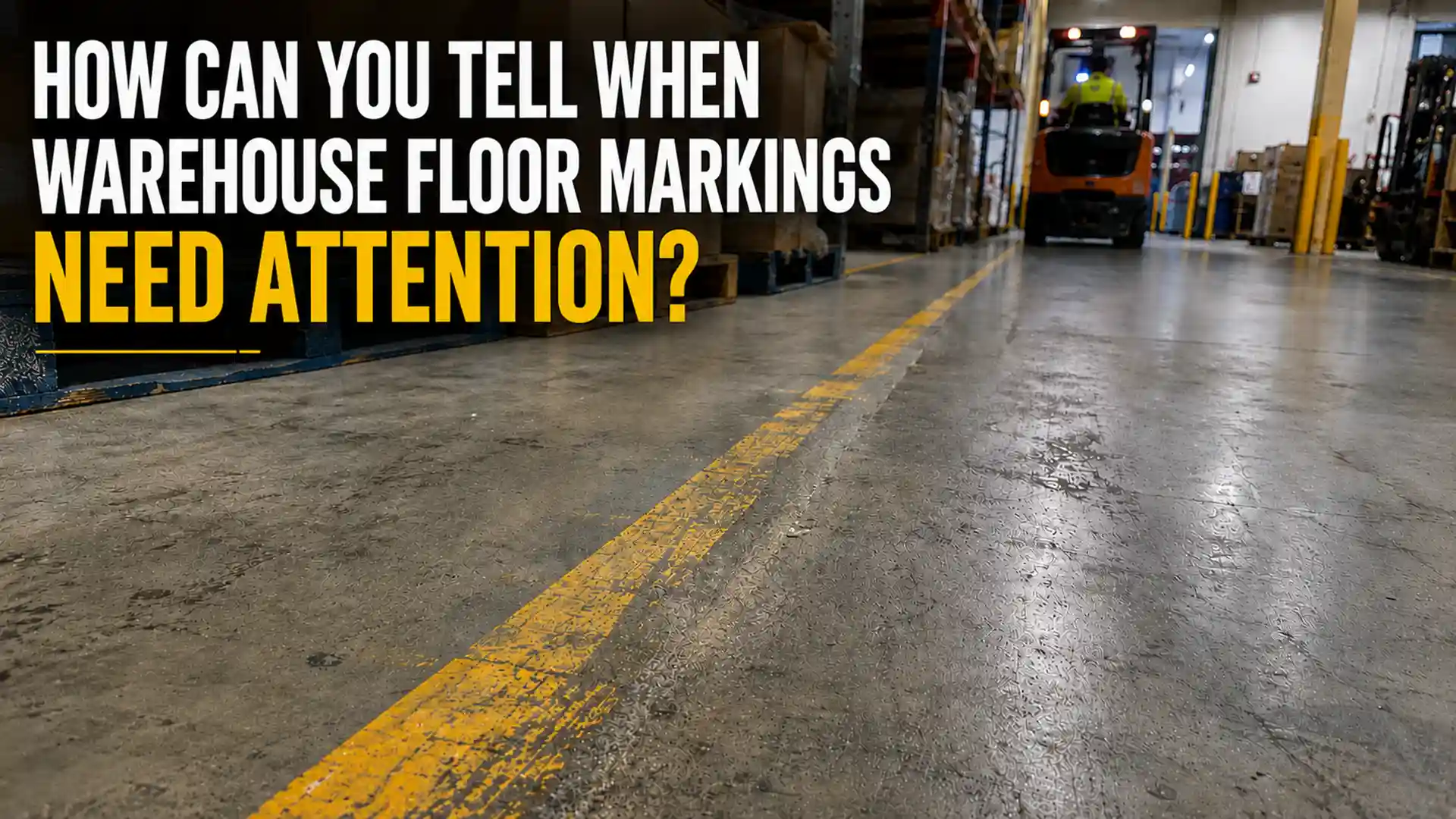
A warehouse rarely sends one obvious signal that its floor markings need attention. Instead, small changes begin appearing during ordinary shifts: employees favour a different walking route, a staging area gradually expands, or a forklift operator routinely adjusts course around an active section of the floor.
These behaviours are worth noticing because the markings may still be visible while the operation around them has changed. Easy Line Marking considers these real operating conditions when discussing Warehouse Safety Line Painting in Markham, rather than treating faded paint as the only reason to review a warehouse floor.
Signal one: people stop following a marked route
A pedestrian walkway can remain clearly painted while employees gradually stop using it. That doesn't automatically mean the walkway was incorrectly positioned when it was created. The surrounding operation may simply have changed.
Perhaps equipment has moved, storage requirements are different, or another activity now makes an alternative route more practical. Instead of immediately repainting the existing path, the useful response is to understand why behaviour has changed.
Easy Line Marking can consider pedestrian movement as part of a broader site assessment rather than assuming every existing line should automatically remain where it is.
Signal two: forklift movement no longer matches the floor
Forklift travel is another useful indicator.
Operators may consistently take a wider route around a particular area or alter their path because the original travel lane no longer corresponds comfortably with surrounding operations. A recurring pattern is more informative than one unusual movement during a busy shift.
When evaluating Warehouse Safety Line Painting in Markham, facility managers can watch how equipment moves during normal working conditions. The objective is not to create a new marking for every observed behaviour but to identify repeated differences between the intended layout and actual use.
Signal three: temporary areas become permanent
Warehouses often need temporary flexibility. Materials may be staged differently during a large shipment, equipment may be moved temporarily, or a normally open area may be occupied during an unusually busy period.
The situation becomes more interesting when "temporary" activity happens every day.
Facility managers may notice:
- Materials repeatedly occupying the same unmarked location
- Staging extending beyond its established area
- Equipment regularly being parked somewhere different
- Workstations affecting nearby movement patterns
- Shipping or receiving activity consistently using additional floor space
These recurring patterns can indicate that the operation has evolved beyond part of the existing arrangement.
Signal four: the lines are visible but the meaning is unclear
Visibility and clarity are not the same thing.
A bright line can still be ineffective if employees cannot easily understand what it represents or if several nearby markings compete for attention. Adding more paint is not necessarily the answer.
For Warehouse Safety Line Painting in Markham, it is useful to consider what each marking communicates. Forklift travel lanes, pedestrian walkways, storage aisles, loading areas, staging zones, workstations, equipment parking areas, crosswalks, and other defined spaces each need an understandable role within the overall floor arrangement.
Easy Line Marking can assess existing markings alongside the operational requirements of the facility.
Signal five: busy shifts expose weaknesses
A warehouse may look exceptionally organised before operations begin.
Once forklifts are travelling, employees are walking between areas, materials are being moved, and shipping or receiving activity increases, the floor faces a very different test. Areas that appear spacious during quiet periods can become constrained during normal activity.
Observe the facility at representative times rather than judging it only when the floor is relatively empty.
This gives Easy Line Marking more useful operational context when assessing whether existing markings still correspond with the facility's requirements.
Signal six: some markings disappear faster than others
Wear is rarely uniform across an industrial floor.
Areas experiencing frequent movement may look different from sections with limited activity. Instead of treating the entire floor as equally worn, identify where visibility is deteriorating and compare those locations with actual operational use.
This can help distinguish a local maintenance issue from a broader layout question.
When planning Warehouse Safety Line Painting in Markham, that distinction can prevent a facility from assuming that every existing marking needs exactly the same treatment.
Signal seven: the warehouse itself has changed
Some of the strongest clues have nothing to do with paint condition.
Storage requirements may have increased. A workstation may have moved. Shipping and receiving activity may operate differently. Equipment parking needs can change as the facility develops.
Easy Line Marking provides both repainting of existing layouts and new layout design. This allows a facility to distinguish between markings that remain useful but need refreshing and areas where current operations may justify reconsidering the layout.
A changed warehouse does not automatically require a changed floor, but it gives managers a reason to check.
What deserves attention during the review?
Once these signals appear, avoid making individual changes without looking at their relationship to the wider facility.
A review can consider:
- Existing floor layout
- Measurements of relevant areas
- Surface condition
- Forklift and pedestrian movement
- Accessibility and safety requirements
- Operational requirements
- Areas where behaviour differs from the intended arrangement
At Easy Line Marking, site inspections are typically performed by an experienced estimator or project manager who can evaluate these factors before an appropriate marking solution is recommended.
That makes the assessment a useful diagnostic stage rather than simply a count of lines requiring paint.
The floor condition tells a different story
After identifying what needs attention, the physical surface becomes relevant.
Confirmed preparation by Easy Line Marking may include cleaning dirt, dust, and debris, removing loose materials, ensuring the surface is dry, measuring and laying out markings, and using masking or chalking guide lines where required.
For Warehouse Safety Line Painting in Markham, preparation should correspond with actual floor conditions rather than introducing processes that the project does not require.
The layout decision and surface preparation are related, but they solve different problems.
Operations should influence the project schedule
Identifying a marking need does not mean the entire facility must stop operating.
Where appropriate, Easy Line Marking can schedule warehouse projects in phases so sections remain operational while work is completed. Evening, weekend, or other lower-activity periods may also be considered depending on the facility's requirements.
This is particularly relevant when the areas requiring attention are spread across active parts of the warehouse.
Planning the sequence around operations can make the project more practical without changing what the markings are intended to accomplish.
Don't wait for every line to disappear
A completely faded floor is an obvious reason to consider repainting, but it is not the only useful trigger.
Recurring workarounds, altered forklift movement, expanding staging activity, changed pedestrian behaviour, and operational changes can provide earlier evidence that part of the layout deserves attention.
Easy Line Marking can use these observations when assessing Warehouse Safety Line Painting in Markham, helping determine whether the requirement involves refreshing existing markings or considering a new arrangement.
The practical takeaway
Instead of asking only, "Are our warehouse lines faded?", watch what happens around them.
The stronger indicators may be employees avoiding a route, equipment repeatedly moving differently from the marked layout, or designated areas no longer matching the way the facility operates. These behaviours provide useful information because they show how the floor performs during real work.
For Warehouse Safety Line Painting in Markham, Easy Line Marking can assess the facility's existing markings, layout, surface conditions, and operational requirements before discussing an appropriate approach.
Phone: +1 437-577-3547
Email: info@easylinemarking.ca
Ready to Get Started?
Request a free, no-obligation quote and our team will get back to you within one business day.
- Free on-site assessment — no obligation
- Fast response — usually within 1 business day
- Work scheduled around your business hours


