
Parking Lot Markings
Which parts of a parking lot should be marked differently from standard parking stalls?
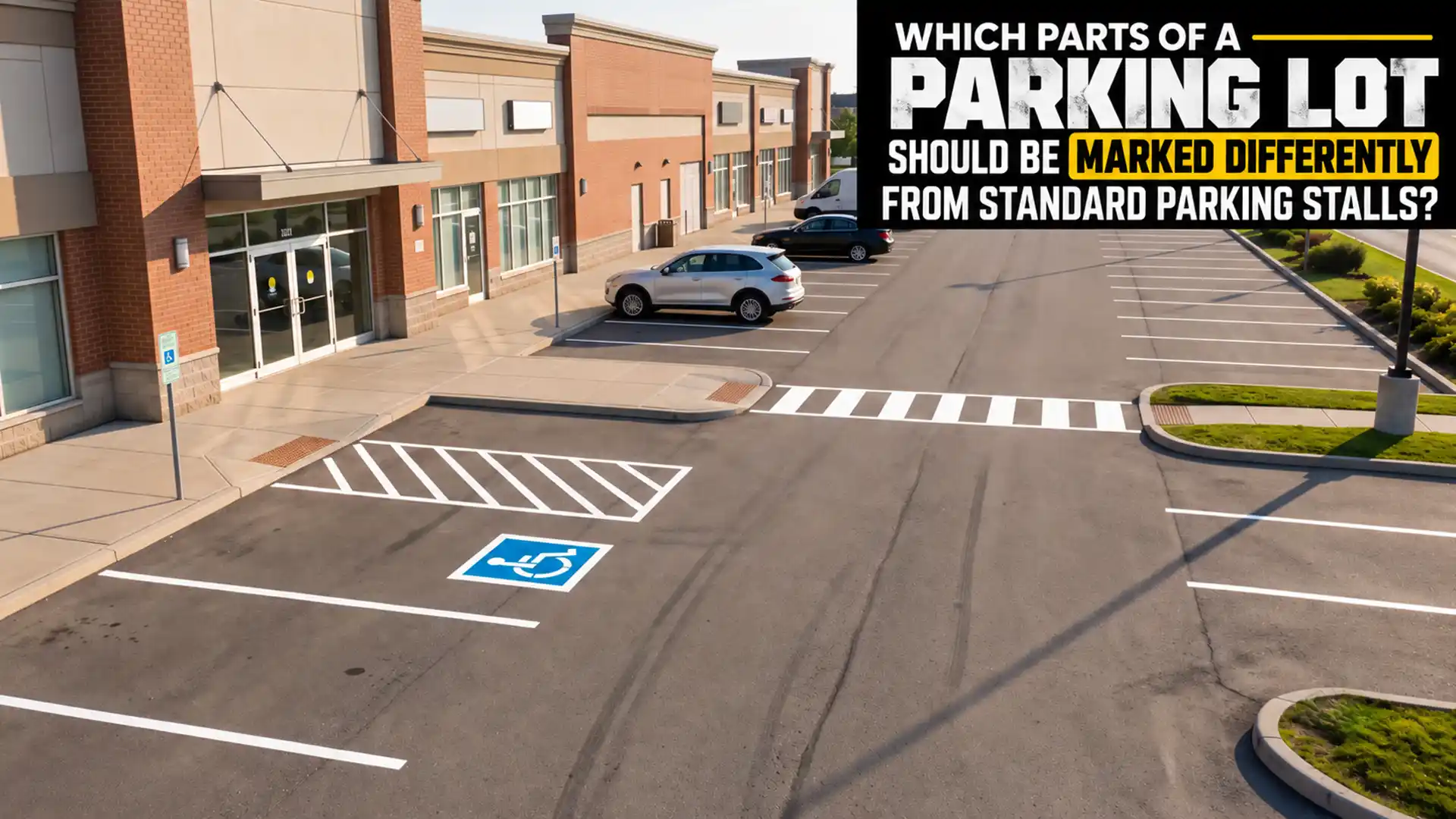
A commercial parking lot may look like one continuous paved surface, but the space can perform several different functions. Vehicles park in one area, travel through another, while pedestrians may need designated routes between parking areas and destinations on the property. Other sections can have specific purposes based on the site's requirements.
For property managers searching for Best Parking Lot Painting in Toronto, recognizing these differences is an important starting point. Easy Line Marking approaches private commercial parking areas according to their intended layout rather than treating every section of pavement as though it needs the same type of marking.
Begin with the standard parking areas
Parking stalls usually form a significant part of the visible layout. Their boundaries establish where individual vehicles are intended to park and create the basic structure of a parking row.
The arrangement needs to reflect the layout established for the property.
Easy Line Marking can repaint an existing parking layout or develop a new one for applicable projects, including newly paved surfaces and parking lot reconfigurations.
When considering Best Parking Lot Painting in Toronto, property managers should therefore distinguish between preserving an existing arrangement and establishing a different one. The project requirements determine which approach is appropriate.
Accessible parking is not simply another stall
Accessible parking areas have requirements that distinguish them from ordinary parking spaces.
They should be considered according to the applicable accessibility requirements and the property's established layout rather than treated as standard stalls with an additional symbol.
This makes them a distinct part of the overall Parking Lot Line Painting project.
During site assessment, Easy Line Marking can review accessibility requirements alongside measurements, existing markings, and the intended parking arrangement. The relevant marking positions can then be incorporated into the defined scope.
For Best Parking Lot Painting in Toronto, treating different parking functions individually helps prevent the entire lot from being approached as one repetitive grid.
Pedestrian routes need meaningful connections
People moving between parked vehicles and destinations on the property may have different needs from vehicles circulating through the lot.
Where designated pedestrian markings are required, their placement should correspond with genuine movement routes.
A pedestrian route should lead somewhere meaningful. Similarly, a crosswalk should correspond with a location where an actual pedestrian path needs to cross a vehicle travel area.
Adding a crossing simply because there is open asphalt does not create a useful pedestrian connection.
A Parking Lot Line Painter should therefore work from the intended property layout rather than adding markings solely for visual effect.
Vehicle movement is different from vehicle parking
Parking stalls identify where vehicles remain. Travel areas serve another function: they accommodate movement through applicable sections of the private property.
This distinction matters when planning Best Parking Lot Painting in Toronto.
An internal vehicle route may connect an entrance with parking rows or another designated area. Any markings included in these sections should relate to the intended traffic arrangement for the private property.
Easy Line Marking focuses on private commercial and industrial properties rather than municipal streets or public highways.
Separating parking functions from vehicle movement helps establish what each part of the pavement is intended to communicate.
Loading areas should reflect their own purpose
Some commercial properties include areas used for loading or other specific operational activities.
These spaces should not automatically be marked as extensions of nearby parking rows. If an area has a different function, its markings need to correspond with that function and the established property layout.
This principle is useful for Best Parking Lot Painting in Toronto because it encourages property managers to consider the complete use of the pavement before deciding what needs painting.
A loading-related section, parking row, pedestrian area, and vehicle route can all occupy the same property while requiring different marking decisions.
Designated areas should remain clearly defined
A commercial parking property may also contain fire routes, curb painting, arrows, stop bars, accessible parking, speed humps, or other designated markings where they are applicable to the site's requirements.
These elements should not be added automatically to every project.
Their inclusion should depend on the actual property, its established layout, and relevant requirements.
This is where Parking Lines Painting becomes more than repeating rows of parallel lines. The project needs to distinguish different functions while maintaining a coherent overall arrangement.
For Best Parking Lot Painting in Toronto, the question is not how many marking types can fit onto the pavement, but which ones the property actually requires.
Some asphalt should remain unmarked
Not every empty section of a parking lot needs a painted symbol, arrow, box, or line.
Unnecessary markings can introduce information that has no clear function. A blank pavement area can remain blank when the property layout does not require additional guidance there.
This makes restraint part of good layout planning.
Easy Line Marking can review the existing arrangement and intended property use before establishing the marking scope. Measurements and site conditions can then help determine where the required markings belong.
For property managers researching Best Parking Lot Painting in Toronto, this provides a useful way to evaluate the project: every proposed marking should have an identifiable reason for being there.
Bring the different areas into one coherent layout
Although different parking lot sections have different functions, they still need to work as one property layout.
Parking stalls should relate logically to vehicle movement areas. Pedestrian Markings should correspond with actual routes. Crossings should connect relevant pedestrian paths across vehicle travel areas, while designated operational areas should remain connected to their intended use.
Easy Line Marking site inspections are typically completed by an experienced estimator or project manager. Relevant measurements, existing markings, pavement conditions, accessibility and safety requirements, and operational needs can be reviewed as part of establishing the project.
Preparation may include cleaning dirt, dust, and debris, removing loose material, and ensuring the surface is dry. Markings can then be measured and laid out, with masking or chalk guide lines used where necessary.
Easy Line Marking uses waterborne traffic paint and solvent-based traffic paint according to project and site requirements.
Give each area the markings it actually needs
A commercial parking lot is not simply a collection of identical stalls. It can contain parking, vehicle movement, pedestrian connections, accessibility-related areas, loading sections, and other designated spaces.
Understanding those differences helps establish a marking project around function rather than paint coverage.
For businesses looking for Best Parking Lot Painting in Toronto, Easy Line Marking can assess a private commercial parking area, review its requirements, and establish an appropriate scope for repainting or a new layout.
Contact Easy Line Marking to discuss your Toronto parking lot marking project.
Phone: +1 437-577-3547
Email: info@easylinemarking.ca
Ready to Get Started?
Request a free, no-obligation quote and our team will get back to you within one business day.
- Free on-site assessment — no obligation
- Fast response — usually within 1 business day
- Work scheduled around your business hours


