
No Parking Area
No Parking Area Marking: Why Clear Parking Restrictions Matter
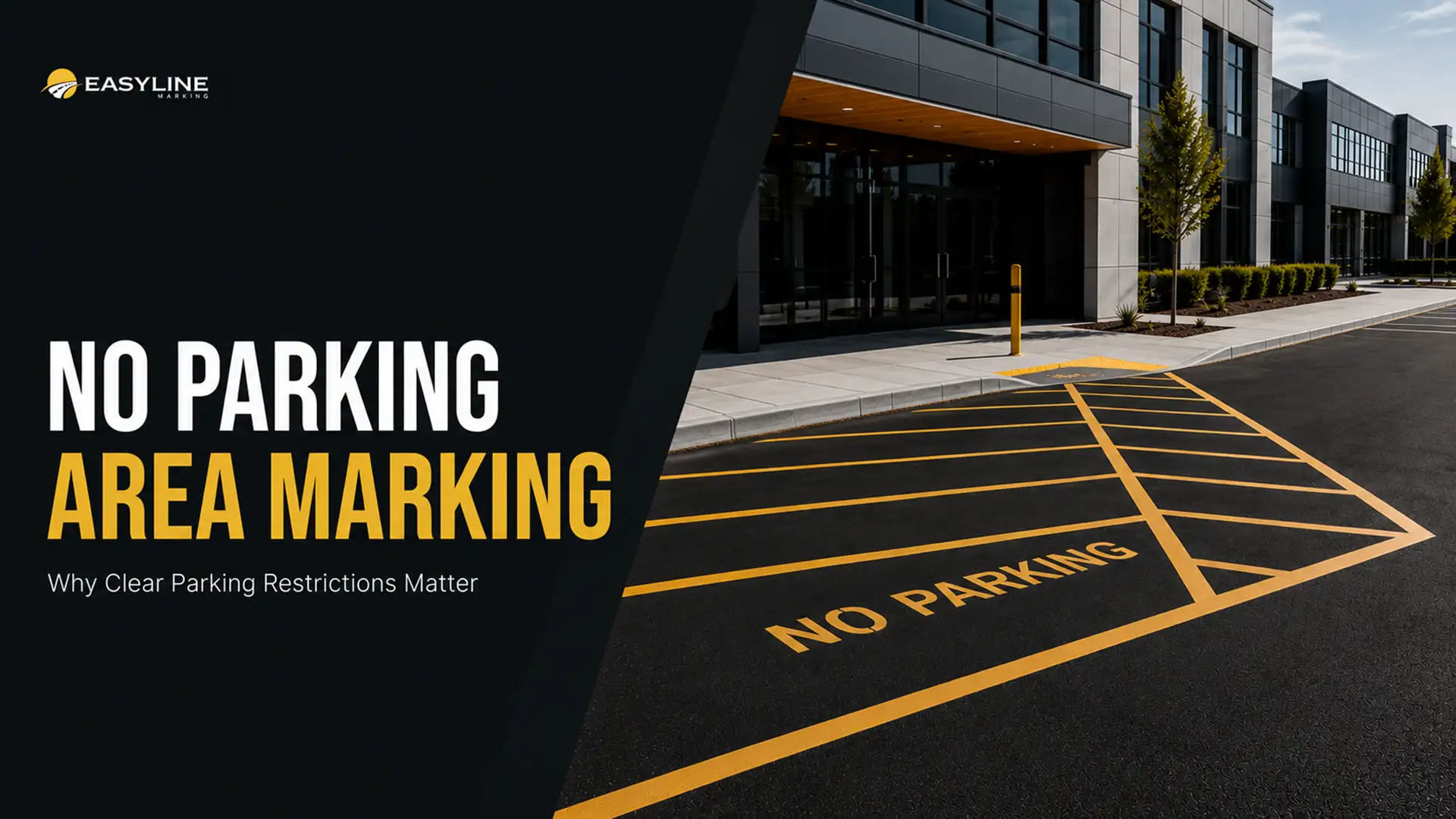
No Parking Area Marking identifies locations where vehicles are prohibited from parking due to safety, operational, accessibility, or traffic flow requirements. These markings help prevent obstructions, maintain emergency access, improve vehicle circulation, and support efficient property operations across commercial, industrial, retail, and residential properties.
Why Parking Restrictions Need More than Signs
Most drivers understand what a "No Parking" sign means. The challenge is that signs alone are not always enough to prevent vehicles from stopping in restricted areas.
In busy parking lots, loading zones, industrial sites, and condominium communities, drivers often focus on available parking spaces rather than overhead signage. Highly visible pavement markings reinforce restrictions directly where parking decisions are made.
This is why No Parking Area Marking has become a standard practice on well-managed properties. It provides immediate visual guidance and helps reduce confusion before vehicles enter restricted zones.
Where No Parking Areas Are Commonly Required
Every property has locations where parked vehicles can create operational problems or safety risks.
Fire Routes
Emergency vehicle access must remain unobstructed at all times. Clearly marked fire routes help prevent vehicles from blocking critical access points.
Loading and Delivery Areas
Commercial properties rely on designated loading zones to support deliveries, service vehicles, and operational activities.
Building Entrances
Vehicles parked near entrances can create congestion and reduce accessibility for visitors.
Accessibility Access Aisles
These areas must remain clear to ensure individuals with mobility devices can safely enter and exit vehicles.
Vehicle Turning Areas
Large vehicles often require additional space to maneuver safely within a property.
Professional No Parking Area Marking helps communicate these restrictions clearly and consistently.
The Operational Impact of Unauthorized Parking
Many property owners view parking violations as a minor inconvenience. In reality, improperly parked vehicles can create significant operational challenges.
A delivery truck blocked by parked cars may delay shipments. A fire route obstruction can create serious emergency response concerns. Congested traffic lanes can lead to driver frustration and increase the risk of accidents.
One common observation across commercial properties is that parking issues often occur in areas where restrictions are poorly defined or difficult to see.
Visible pavement markings reduce uncertainty and make parking expectations easier to understand.
Benefits beyond Enforcement
Many facility managers initially focus on parking restrictions as a way to prevent violations. However, the benefits extend well beyond enforcement.
Improved Traffic Flow
Vehicles move more efficiently when restricted areas remain clear.
Enhanced Safety
Drivers and pedestrians benefit from improved visibility and reduced congestion.
Better Emergency Access
Emergency responders can access buildings and critical areas without delay.
Reduced Property Management Complaints
Clear markings help minimize disputes regarding where vehicles can and cannot park.
Professional Property Appearance
Well-maintained markings contribute to a more organized and professionally managed site.
For many properties, No Parking Area Marking supports both operational efficiency and customer experience.
Ontario Property Considerations
Across Ontario, property managers frequently deal with parking challenges caused by weather, traffic volume, and site design.
Snow accumulation, plowing activities, road salt, and seasonal wear can gradually reduce marking visibility. As markings fade, compliance often decreases because restrictions become less obvious.
In busy commercial properties throughout Toronto and the GTA, maintaining visible parking restrictions is particularly important due to high vehicle turnover and limited parking availability.
Routine inspections help ensure restricted zones remain clearly identifiable throughout the year.
Common Mistakes Property Managers Make
Relying Exclusively on Signs
Signs alone may not provide enough visual reinforcement in high-traffic areas.
Allowing Markings to Fade
Worn markings reduce visibility and make enforcement more difficult.
Inconsistent Restriction Zones
Different marking styles can confuse visitors and drivers.
Ignoring High-Risk Areas
Loading zones, fire routes, and access aisles should receive priority attention.
Waiting for Complaints
Many parking problems can be prevented through proactive maintenance.
These issues often reduce the effectiveness of No Parking Area Marking programs and create avoidable operational challenges.
Best Practices for Effective No Parking Areas
Properties that successfully manage parking restrictions typically follow several proven practices.
Make Restricted Areas Highly Visible
Drivers should recognize restrictions before entering the area.
Combine Markings and Signage
Using multiple visual cues improves compliance.
Prioritize Critical Access Routes
Emergency and operational access areas should remain clearly defined.
Inspect Markings Annually
Regular reviews help identify fading or damaged markings.
Coordinate with Parking Lot Maintenance
Restriping projects often provide an ideal opportunity to refresh restricted areas.
When properly maintained, No Parking Area Marking becomes an important component of overall property management.
Property Manager Perspective
Property managers are responsible for maintaining safe, accessible, and efficient environments for tenants, visitors, employees, and service providers.
Clearly marked no parking zones help support these objectives by reducing congestion, improving traffic circulation, and protecting critical operational areas.
Whether managing a retail plaza, office complex, warehouse facility, condominium property, or industrial site, visible parking restrictions contribute to smoother day-to-day operations.
Conclusion
Parking restrictions serve an important purpose beyond simple enforcement. They help maintain emergency access, support operational efficiency, improve safety, and reduce traffic conflicts. No Parking Area Marking provides a clear visual system that helps drivers understand where parking is prohibited and why those restrictions matter. For commercial, industrial, and residential properties throughout Ontario, maintaining visible no parking zones remains an essential part of effective property management.
FAQ
What is no parking area marking?
It is the use of pavement markings to identify areas where vehicles are prohibited from parking.
Why are no parking zones important?
They help maintain safety, emergency access, traffic flow, and operational efficiency.
Where no parking markings should be used?
Common locations include fire routes, loading areas, building entrances, accessibility access aisles, and vehicle turning zones.
How often should no parking markings be repainted?
Most properties should inspect markings annually and repaint them when visibility begins to decline.
Do no parking markings improve traffic flow?
Yes. Clearly marked restrictions help reduce obstructions and keep vehicle circulation routes open.
Contact Easy Line Marking
Need professional no parking markings, fire route markings, parking lot striping, or traffic control markings?
Phone: (437) 577-3547
Email: info@easylinemarking.ca
Contact Easy Line Marking to discuss parking lot safety, traffic flow improvements, and pavement marking requirements for your property.
Ready to Get Started?
Request a free, no-obligation quote and our team will get back to you within one business day.
- Free on-site assessment — no obligation
- Fast response — usually within 1 business day
- Work scheduled around your business hours