
Commercial Property
What should a parking lot layout communicate before drivers reach the entrance?
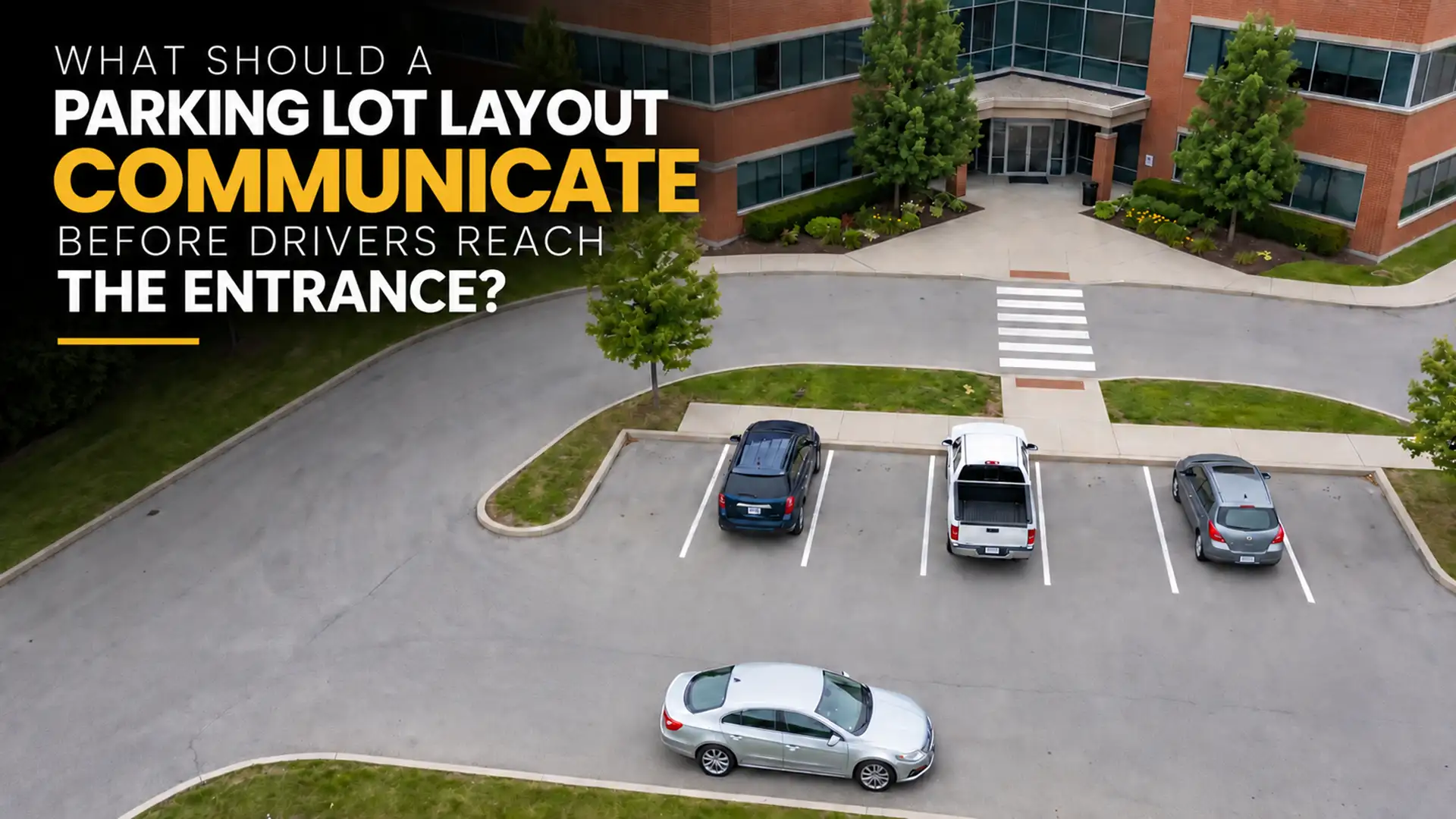
A driver entering a commercial property starts making decisions almost immediately. Where is the parking area? How are the spaces arranged? Which parts of the pavement have a specific purpose? Where should vehicles travel, and which areas should remain available for other property users?
Good markings help communicate those answers through the physical layout.
For businesses considering Commercial Parking Lot Striping in Cobourg, this is a useful way to think about the project. Easy Line Marking works on private commercial properties and plans markings according to the areas and requirements identified for each site. Instead of viewing striping as isolated painted lines, consider what those markings need to communicate from the moment someone enters the property.
The first few seconds should make the property easier to read
Imagine visiting a commercial property for the first time.
You do not know its layout. You are looking through the windshield while also watching other vehicles, pedestrians, buildings, and available parking.
The pavement should not require unnecessary interpretation.
Markings can define the spaces and designated areas that make up the parking environment. Their position, consistency, and relationship to the rest of the property help communicate how the space is intended to be used.
This is particularly important when the person arriving has no previous knowledge of the site.
Drivers need to recognize where parking belongs
Once inside the property, the next task is usually finding an appropriate place to park.
Clearly defined parking spaces provide a visible structure to the parking area. Instead of vehicles establishing their own spacing, the markings show how individual spaces are intended to be arranged.
This can also help the property make more organized use of the pavement available for parking.
When planning Commercial Parking Lot Striping in Cobourg, the objective should therefore extend beyond making lines visible. The markings should collectively create an arrangement that drivers can recognize and follow without having to work out the intended parking pattern themselves.
Individual lines need to make sense as part of a larger layout
A parking stall line does not operate independently.
Its position relates to the line beside it, the other spaces in the row, nearby pavement areas, and the overall arrangement of the property.
This means consistency matters.
Measurements are part of professional layout work because the finished parking area needs to function as an organized whole rather than as a collection of separately painted sections.
Easy Line Marking can measure areas requiring markings and lay out the work according to the project requirements. Masking or chalk guide lines may also be used where required before the permanent markings are applied.
The purpose is straightforward: each marking should belong to a coherent layout.
The journey continues after the vehicle is parked
Parking is not the final interaction someone has with the pavement.
Drivers become pedestrians after leaving their vehicles. Other people may already be moving between the building and parking area.
That changes how a property manager should look at the site.
Instead of standing in one location and examining individual lines, consider walking through the property as a visitor would. Look at how the parking arrangement relates to the building and any designated pavement areas.
This visitor-level perspective can reveal questions that are less obvious when the parking lot is viewed only as a large painted surface.
Markings should have a purpose
More paint does not automatically create a better-organized property.
Every marking should correspond with something the property needs to communicate.
This principle helps avoid treating Commercial Parking Lot Striping in Cobourg as a matter of filling empty pavement with additional lines. A marking is useful when it identifies a parking space, designated area, or other required part of the site's layout.
Before deciding what should be included, property managers can ask:
- What does this marking tell someone using the property?
- Is its purpose immediately understandable?
- Does it relate logically to the surrounding layout?
- Is the marking actually required for this site?
Purpose should come before quantity.
Look at the property from several viewpoints
Property managers usually know their sites extremely well. That familiarity can make some layout issues harder to notice.
Try viewing the parking area from three perspectives.
First-time driver: Can someone unfamiliar with the property understand where the parking spaces are?
Parked customer or visitor: Once they leave the vehicle, does the surrounding pavement arrangement remain understandable?
Property manager: Do the markings correspond with how the commercial site is intended to operate?
These viewpoints shift attention away from paint alone and toward usability.
They also provide useful observations to discuss with Easy Line Marking when the project requirements are being established.
Site conditions turn the idea into a real project
Once the intended function of the markings is understood, the physical property still needs to be considered.
An experienced Easy Line Marking estimator or project manager can assess the existing property layout, pavement markings, traffic flow, surface condition, measurements, accessibility and safety requirements, and operational needs.
This step connects the desired parking arrangement with the conditions that actually exist on site.
For Commercial Parking Lot Striping in Cobourg, that distinction matters. A concept that appears simple when discussed away from the property may involve measurements or other site-specific considerations once the pavement is reviewed directly.
The final scope should therefore be based on the actual property rather than assumptions.
The pavement itself is part of the project
Once the layout requirements are established, attention turns to the surface receiving the markings.
Easy Line Marking's confirmed preparation may include cleaning dirt, dust, and debris, removing loose materials, and ensuring the surface is dry. Markings can then be measured and laid out, with masking or chalk guide lines used where required.
Easy Line Marking uses waterborne traffic paint and solvent-based traffic paint.
The specific approach depends on the project and the conditions found at the property.
This keeps preparation connected to the actual pavement rather than relying on unsupported claims about processes or materials that may not apply.
A useful parking lot can explain itself visually
The strongest test is simple: imagine removing all verbal instructions from the property.
Would the Pavement Markings still help someone understand where parking spaces and other designated areas are intended to be?
That is the communication role of a well-planned layout.
It does not mean covering the pavement with unnecessary arrows, lines, or painted areas. In fact, additional markings without a clear purpose can work against the goal.
The focus should remain on the markings the commercial property actually needs and how clearly they work together.
Start with the experience you want the property to provide
When planning Commercial Parking Lot Striping in Cobourg, consider the parking lot as a sequence rather than a flat surface.
A driver arrives, interprets the property, locates the intended parking area, positions the vehicle within a defined space, exits the vehicle, and continues toward their destination.
The markings encountered along that journey should support the intended use of the property.
Easy Line Marking can assess the site, measure areas requiring markings, review property requirements, and develop the scope around the commercial space itself.
To discuss a private commercial parking lot project in Cobourg, provide the available property information, photographs, approximate dimensions, and project requirements.
Phone: +1 437-577-3547
Email: info@easylinemarking.ca
Ready to Get Started?
Request a free, no-obligation quote and our team will get back to you within one business day.
- Free on-site assessment — no obligation
- Fast response — usually within 1 business day
- Work scheduled around your business hours


