
Road Marking
What should you look for before repainting road lines?
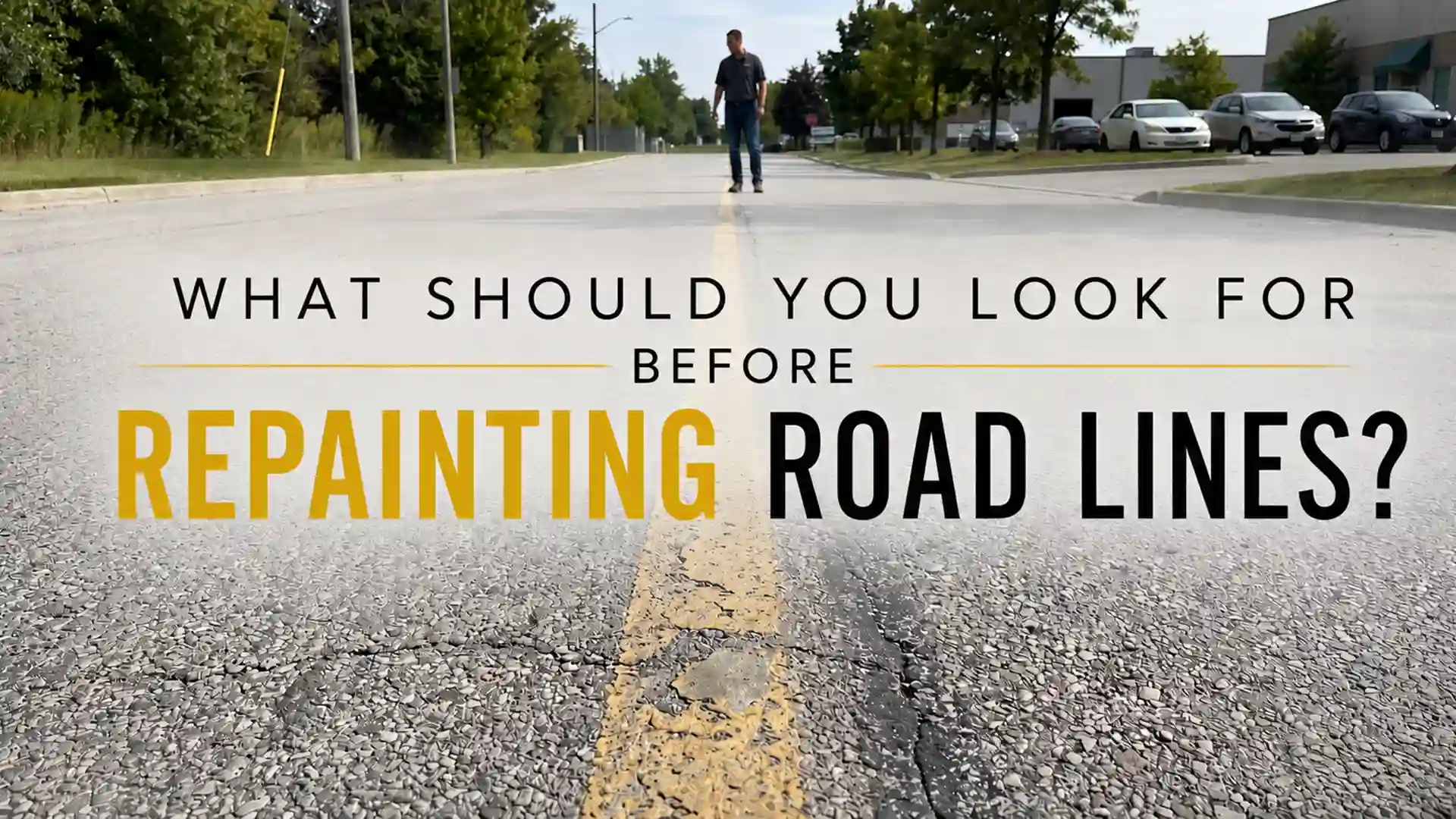
Road markings are easy to overlook when they are working properly. Drivers follow them without thinking about how clearly they separate movement areas, indicate boundaries, or communicate directions. Once they fade, however, their importance becomes much more obvious.
Easy Line Marking approaches Road Line Painting by considering the condition and purpose of the existing markings before work begins. For property and facility managers, the first question shouldn't simply be how faded the lines have become. It should be whether the markings still provide clear information to the people using the area.
Start with visibility
A marking that looks visible in bright daylight may appear very different during rain, low light, or when the pavement is wet. That makes visibility worth considering from the perspective of someone actually approaching and using the roadway.
Look at the markings from different distances and angles. Consider whether lane boundaries, directional information, pedestrian areas, or other important markings can still be recognised quickly.
Sometimes the issue is simply worn paint. In other cases, visibility problems may indicate that certain markings deserve closer attention.
Understand what each marking communicates
Not every line serves the same purpose. Some establish boundaries, while others help organise vehicle movement or distinguish specific areas.
Before Road Line Painting, consider the purpose behind the existing markings rather than treating the entire surface as one uniform area.
A review may include:
- Centre and lane markings
- Edge lines
- Directional markings
- Turning areas
- Stop or yield markings
- Pedestrian crossing markings
- Designated or restricted areas
The objective is to make sure each marking has a clear reason for being there.
Has anything changed?
A road or commercial property can change while its pavement markings remain exactly where they were originally installed. Traffic volumes may increase, access points may change, or vehicles may begin using particular areas differently.
That doesn't automatically mean the layout needs to be redesigned.
It does mean the existing arrangement should be evaluated against current use before Road Line Painting begins. Making an outdated arrangement brighter doesn't necessarily make it more appropriate.
Watch traffic behaviour
People using a roadway can reveal problems that aren't immediately obvious from an inspection.
Pay attention to areas where drivers frequently hesitate, change direction unexpectedly, or appear uncertain about where they should travel. These behaviours don't automatically mean the markings are responsible, but recurring patterns can indicate where further assessment may be worthwhile.
A professional review should consider the surrounding circumstances rather than assuming that repainting will resolve every traffic issue.
Don't ignore the pavement
The surface receiving the markings is another part of the project. Dirt, dust, debris, loose material, and moisture can affect preparation and should be considered before work begins.
Confirmed preparation used by Easy Line Marking can include cleaning dirt, dust, and debris, removing loose materials, ensuring the surface is dry, measuring areas to be marked, and using masking or chalking guide lines where required.
The preparation should support the actual project requirements instead of becoming a standard list of unnecessary steps.
Consider weather and wear
Ontario weather can place considerable demands on pavement markings. Rain, moisture, temperature changes, winter conditions, and regular vehicle traffic can all influence how markings look over time.
For that reason, Road Line Painting should be considered alongside the property's maintenance conditions. High-traffic areas may require closer attention than sections that experience considerably less vehicle movement.
Instead of assuming the entire area has worn evenly, identify where visibility has deteriorated most noticeably.
Look at high-wear areas individually
Certain sections naturally deserve closer inspection.
Property and facility managers can pay particular attention to:
- Busy intersections and turning areas
- Entrances and exits
- High-traffic sections
- Areas exposed to frequent vehicle movement
- Markings that appear significantly lighter
- Sections where pavement conditions have changed
This helps establish where maintenance attention may be most useful without automatically treating every marking as equally worn.
Repainting and redesign are different decisions
There is a difference between restoring visibility and changing the information a marking communicates.
If the existing arrangement still works but has become difficult to see, repainting may be appropriate. If traffic patterns or property use have changed, the layout may deserve further consideration before new markings are applied.
Easy Line Marking works with existing layouts as well as new marking requirements, allowing the condition and purpose of the current arrangement to be considered before Road Line Painting is planned.
Ask for reasoning, not just a price
A useful contractor assessment should explain what was observed and why particular recommendations were made.
At Easy Line Marking, site inspections are typically carried out by an experienced estimator or project manager who evaluates the layout, existing markings, traffic flow, surface condition, and project requirements before recommending an appropriate approach.
That creates a more informed starting point for Road Line Painting and helps property managers understand what the project is actually intended to accomplish.
The better question isn't "How faded is it?"
Fading is easy to identify, but it isn't the only consideration.
Ask whether the markings are still providing the information road users need, in the places where they need it. If visibility is the main issue, refreshing the existing arrangement may be enough. If the property has changed, a broader assessment may be more appropriate.
Before Road Line Painting, look at visibility, traffic behaviour, surface condition, weather exposure, and changes in site use. A short assessment can help distinguish ordinary maintenance from a situation that deserves more planning.
The takeaway
Good markings aren't simply about making Pavement Markings look fresh. They should remain visible, purposeful, and appropriate for the environment in which they are used.
If you're planning Road Line Painting, Easy Line Marking can assess the site and discuss the appropriate approach based on its current condition and requirements.
Phone: +1 437-577-3547
Email: info@easylinemarking.ca
Ready to Get Started?
Request a free, no-obligation quote and our team will get back to you within one business day.
- Free on-site assessment — no obligation
- Fast response — usually within 1 business day
- Work scheduled around your business hours


