
Warehouse Safety
Why do growing warehouses struggle with organization and traffic flow?
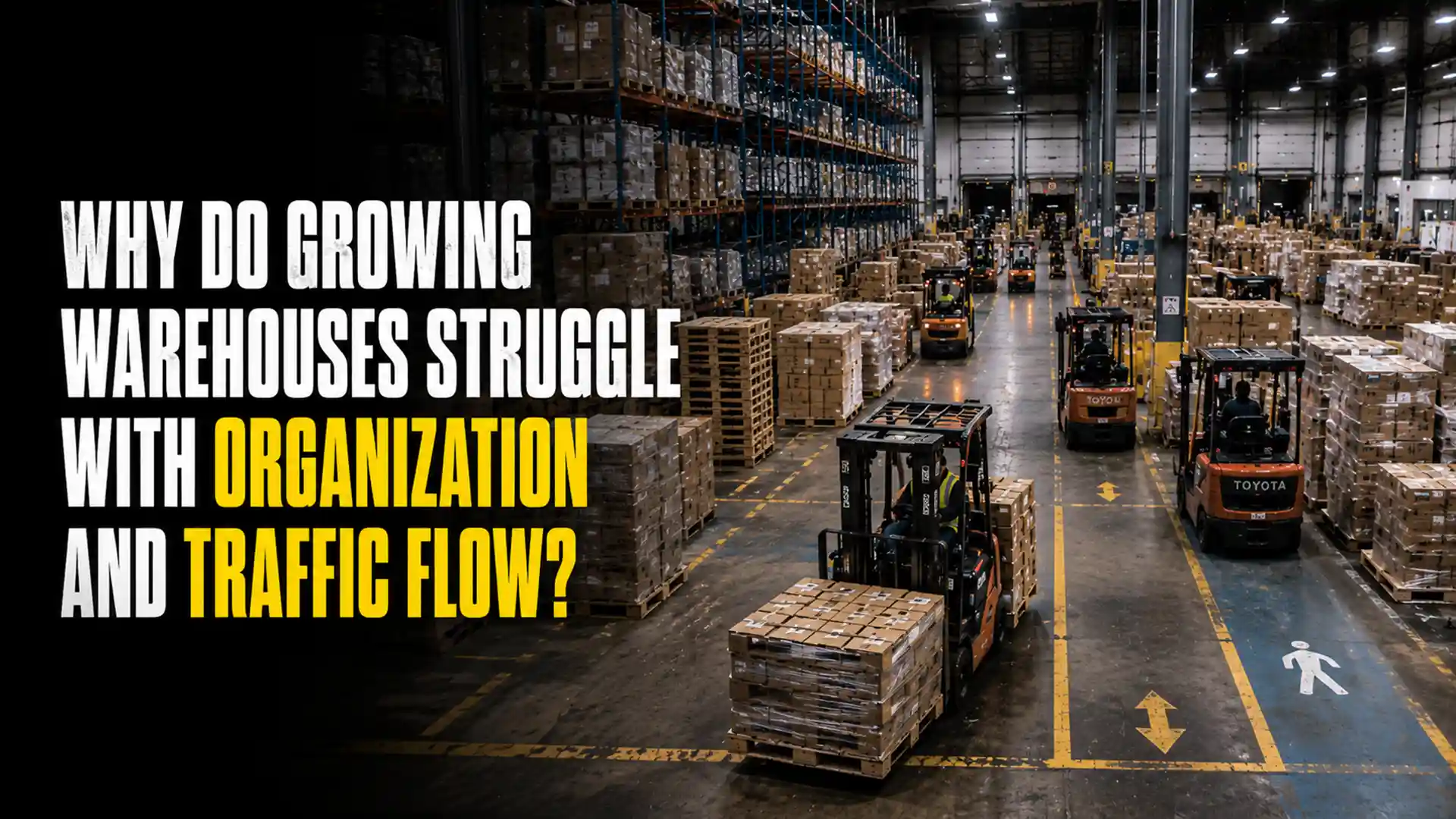
Warehouse operations rarely stay the same for long. Inventory volumes increase, equipment fleets expand, and employee traffic patterns change as businesses grow. What worked efficiently a few years ago may no longer support current operational demands.
Easy Line Marking often finds that warehouses do not become disorganized because employees stop following procedures. More commonly, the facility evolves while the visual guidance system remains unchanged. This is why Warehouse Floor Marking Mississauga projects are often focused on improving workplace organization, traffic flow, and operational efficiency rather than simply repainting faded lines.
Growth often creates challenges that are difficult to notice
Most warehouse managers notice major operational issues quickly.
Smaller changes are harder to identify. A temporary storage area becomes permanent. Additional pallets are placed near traffic routes. New equipment is introduced into spaces that were originally designed for pedestrian movement.
Over time, these adjustments accumulate.
Easy Line Marking regularly works with facilities where employees have adapted successfully to changing conditions, but the overall layout has become less efficient. Many Warehouse Floor Marking Mississauga projects begin after managers recognize that everyday work feels more difficult than it should despite no obvious operational failure.
The problem is not always limited to available space
When warehouse congestion increases, many organizations immediately consider expansion.
However, additional square footage is not always the answer.
Easy Line Marking has evaluated facilities with adequate space but poorly defined operational zones. Storage areas overlap with staging locations. Equipment routes pass through high-traffic workspaces. Materials gradually spread into locations that were never intended for inventory.
These situations make facilities feel crowded even when capacity remains available. Clear visual guidance helps employees understand how space should be used while supporting more consistent operational practices across the entire warehouse.
Why traffic flow has such a large impact on efficiency
Warehouse productivity depends heavily on movement.
Forklifts transport inventory. Employees move between departments. Deliveries enter and leave throughout the day. Every operational activity relies on predictable traffic patterns.
Easy Line Marking frequently finds that traffic flow issues contribute to delays more than many facility managers realize. Small interruptions occurring dozens of times each day can significantly affect overall productivity.
Many Warehouse Floor Marking Mississauga projects focus on improving traffic organization because even modest changes to route clarity can help reduce congestion and improve operational consistency throughout the facility.
Case study: Distribution center workflow improvement
Problem
A distribution center experienced recurring congestion near shipping and staging areas. Forklift operators, warehouse employees, and temporary inventory storage frequently occupied the same space during peak periods.
The facility reported delays, confusion, and increasing difficulty maintaining organized traffic patterns.
Solution
Easy Line Marking reviewed employee movement, equipment routes, and storage practices. Traffic lanes were clarified, staging zones were reorganized, and pedestrian pathways were better defined.
Outcome
The facility experienced smoother traffic flow and improved workplace organization. Supervisors reported fewer interruptions, and employees found it easier to navigate operational areas efficiently.
Field observation
Easy Line Marking frequently observes that warehouse intersections create more operational challenges than long travel lanes.
Most traffic conflicts occur where multiple activities converge. Forklifts cross pedestrian routes. Employees move between departments. Inventory enters and exits staging areas.
These locations require constant awareness and decision-making.
Interestingly, many facilities focus on repainting large traffic lanes while overlooking intersections that experience the highest operational pressure. In practice, improving visibility at a handful of critical locations often delivers a greater benefit than repainting large sections of the warehouse with relatively little traffic activity.
New employees often reveal hidden layout problems
Experienced warehouse staff understand the facility from memory.
They know where equipment travels, where inventory is stored, and which areas become busy throughout the day.
New employees see the warehouse differently.
Easy Line Marking often notices that onboarding challenges reveal weaknesses in visual guidance systems. If new workers struggle to identify traffic routes, storage zones, or operational boundaries, existing employees may be relying too heavily on experience rather than facility organization.
This is one reason Warehouse Floor Marking Mississauga plays an important role in supporting long-term operational consistency.
A better question for warehouse managers
Many managers ask whether floor markings are still visible.
Easy Line Marking encourages a different question.
Are the markings still influencing behavior?
Employees may continue seeing the lines every day while gradually ignoring them because operational needs have changed. When that happens, markings stop functioning as guidance tools and become background visuals.
Many Warehouse Floor Marking Mississauga projects uncover opportunities to improve efficiency simply by aligning markings with current workflows. The goal is not only visibility but also relevance.
Conclusion
Warehouse markings influence how people, equipment, and inventory move through a facility every day. As operations grow, layouts that once worked effectively may no longer support current demands.
Through projects completed across warehouses and distribution facilities, Easy Line Marking has found that clear visual guidance helps improve organization, support safety, and create more efficient workflows. Investing in Warehouse Floor Marking Mississauga helps facilities adapt to changing operational requirements while making better use of the space they already have.
FAQ
What is warehouse floor marking?
Warehouse floor marking uses visual lines, symbols, and designated zones to organize traffic flow, storage areas, workspaces, and pedestrian routes.
Why is warehouse floor marking important?
It helps improve workplace organization, traffic management, safety, and operational efficiency.
How often should warehouse floor markings be reviewed?
Easy Line Marking recommends reviewing markings annually and after significant operational changes or facility expansions.
Which warehouse areas require the most attention?
Intersections, forklift routes, staging zones, and pedestrian walkways often require the most frequent review.
Why is Warehouse Floor Marking Mississauga important for growing facilities?
As warehouse operations evolve, updated markings help maintain organization, support traffic flow, and improve workplace safety.
Contact Easy Line Marking
Easy Line Marking helps warehouses improve safety, efficiency, and traffic flow through clearly defined floor markings and operational zones.
Easy Line Marking helps distribution centers, logistics facilities, and industrial operations create more organized workplaces through visual guidance systems that support employees, equipment operators, and daily workflows.
Whether your goal is improving forklift traffic management, organizing staging areas, defining pedestrian routes, or enhancing workplace safety, Easy Line Marking helps create marking systems that align with real operational needs.
Phone: (438) 725-7842
Email: info@easylinemarking.ca
Ready to Get Started?
Request a free, no-obligation quote and our team will get back to you within one business day.
- Free on-site assessment — no obligation
- Fast response — usually within 1 business day
- Work scheduled around your business hours


