
Line Markings
What finally made us schedule line painting for our commercial property?
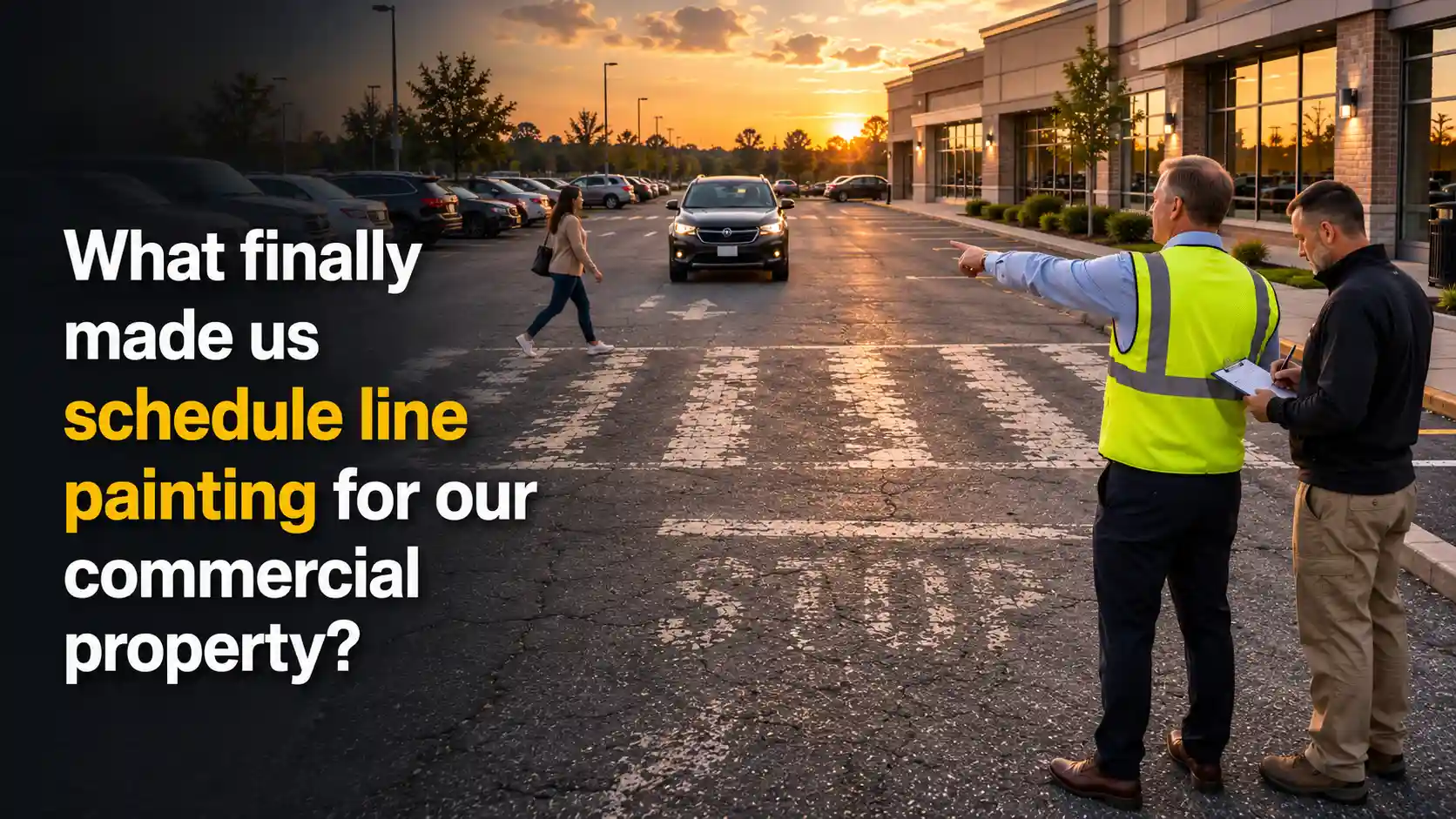
The decision wasn't made because someone reported a major safety issue or because a customer submitted a complaint. It happened during an ordinary morning walkthrough of the property. Everything appeared familiar, yet something felt different. Vehicles hesitated near the entrance, delivery trucks paused before turning into service areas, and visitors spent extra time looking for available parking.
Nothing seemed serious on its own, but together these small observations painted a different picture. The property had gradually changed over the years, while the pavement markings had stayed exactly the same. Easy Line Marking often sees this situation across commercial sites, where Line Painting becomes part of improving day-to-day operations instead of simply refreshing faded lines.
Decision 1: Is this really about faded paint?
At first, it was easy to assume the issue was cosmetic. Some parking stalls had become difficult to distinguish, directional arrows looked worn, and pedestrian crossings no longer stood out as clearly as they once had.
After spending more time observing the property, a different pattern appeared. Drivers were slowing down because they weren't immediately sure where to turn. Visitors crossed traffic lanes wherever it seemed convenient, while delivery vehicles occasionally stopped outside their intended areas.
The paint wasn't the real problem.
The property was no longer communicating clearly with the people using it.
Easy Line Marking believes successful Line Painting begins by understanding how a property functions today rather than focusing only on what the pavement looks like.
Decision 2: Should we repaint only the worst areas?
The next question seemed practical.
Would repainting the faded parking stalls solve the issue, or should the entire property be reviewed?
Walking through the site revealed that several operational changes had taken place over the years.
- Visitor parking demand had increased.
- Delivery schedules had become more frequent.
- A new tenant attracted higher customer traffic.
- Pedestrian movement no longer followed the original walkways.
Repainting only the most visible areas would improve appearance, but it wouldn't improve how the property operated. Easy Line Marking recommended reviewing the complete layout before beginning the Line Painting project so every marking continued supporting current traffic patterns.
Decision 3: When is the right time to do the work?
Like many property managers, scheduling was almost as important as the work itself.
The goal wasn't simply finding an available date. It was choosing a time that minimized disruption for customers, tenants, employees, and delivery drivers.
Several factors influenced the decision:
- Daily traffic volumes.
- Business operating hours.
- Seasonal weather conditions.
- Planned maintenance activities.
- Upcoming tenant events.
Planning ahead allowed the project to fit naturally into the property's maintenance schedule instead of becoming an unexpected interruption. Easy Line Marking works closely with commercial properties to ensure Line Painting supports business operations while keeping disruption to a minimum.
Decision 4: What should we realistically expect afterward?
Every property manager hopes to see a cleaner and more professional-looking site after a marking project is completed. While that visual improvement is important, it is often only the beginning of the results. The more noticeable changes usually appear in the way people interact with the property during their everyday visits.
Within the first few weeks, drivers often begin following directional arrows more confidently because the intended traffic flow is easier to understand. Parking stalls are used more consistently, pedestrians naturally choose designated crossings instead of creating shortcuts, and delivery vehicles move through service areas with fewer interruptions. These improvements happen quietly, without requiring additional signs or constant supervision.
Easy Line Marking has found that successful Line Painting projects improve communication rather than behaviour. When the pavement clearly explains where vehicles and pedestrians should move, people make better decisions naturally, creating a safer, more organized, and more efficient commercial property.
Looking back six months later
Half a year after the project, the biggest difference wasn't how the property looked.
It was how it functioned.
Daily operations felt more organized because movement throughout the site had become predictable. Staff received fewer questions about visitor parking. Delivery drivers accessed loading areas more efficiently, and property managers found routine inspections easier because the layout clearly defined each operational zone.
One interesting observation was that people rarely commented on the markings themselves.
Instead, they described the property as easier to navigate, more professional, and better organized.
Easy Line Marking considers that one of the strongest indicators of successful Line Painting. The markings become part of the property's everyday operation without demanding attention.
The lesson every commercial property can learn
No commercial property remains exactly the same throughout its lifetime. Businesses grow, new tenants arrive, customer expectations change, delivery schedules increase, and parking demand shifts over the years. These changes usually happen gradually, making them easy to overlook until the original layout no longer supports everyday operations as effectively as it once did.
Instead of waiting until the paint has completely faded, Easy Line Marking encourages property managers to regularly observe how the property functions during a normal business day. Watching where drivers hesitate, where pedestrians naturally choose to walk, and how delivery vehicles access service areas often reveals opportunities to improve the layout before small inconveniences become ongoing operational problems.
That is why Line Painting should be viewed as part of long-term property planning rather than simply another maintenance task. When pavement markings continue to reflect how a commercial property actually operates, they help create smoother traffic flow, better organization, and a more professional experience for everyone who visits the site.
Final thoughts
Scheduling a pavement marking project is rarely just about replacing faded paint.
It's an opportunity to evaluate how the property works, how people interact with the space, and whether the layout continues supporting current business needs. Small improvements made at the right time often produce lasting operational benefits without requiring major changes to the property itself.
Through projects completed across Ontario, Easy Line Marking has found that effective Line Painting helps commercial properties create safer traffic flow, improve visitor confidence, support pedestrian safety, and maintain a more professional appearance. When the layout communicates clearly from the entrance to the exit, the entire property becomes easier to navigate, easier to manage, and more enjoyable for everyone who uses it.
Contact Easy Line Marking
Easy Line Marking helps commercial properties create safer, more organized, and more professional environments through clear and durable Pavement Markings.
Whether you manage a retail plaza, office complex, warehouse, industrial facility, condominium community, or mixed-use commercial property, Easy Line Marking develops practical marking systems that improve traffic flow, workplace safety, visitor navigation, and day-to-day operational efficiency.
Phone: (437) 577-3547
Email: info@easylinemarking.ca
Ready to Get Started?
Request a free, no-obligation quote and our team will get back to you within one business day.
- Free on-site assessment — no obligation
- Fast response — usually within 1 business day
- Work scheduled around your business hours


