
Warehouse Safety
Warehouse line painting for safer, better-organized Markham facilities
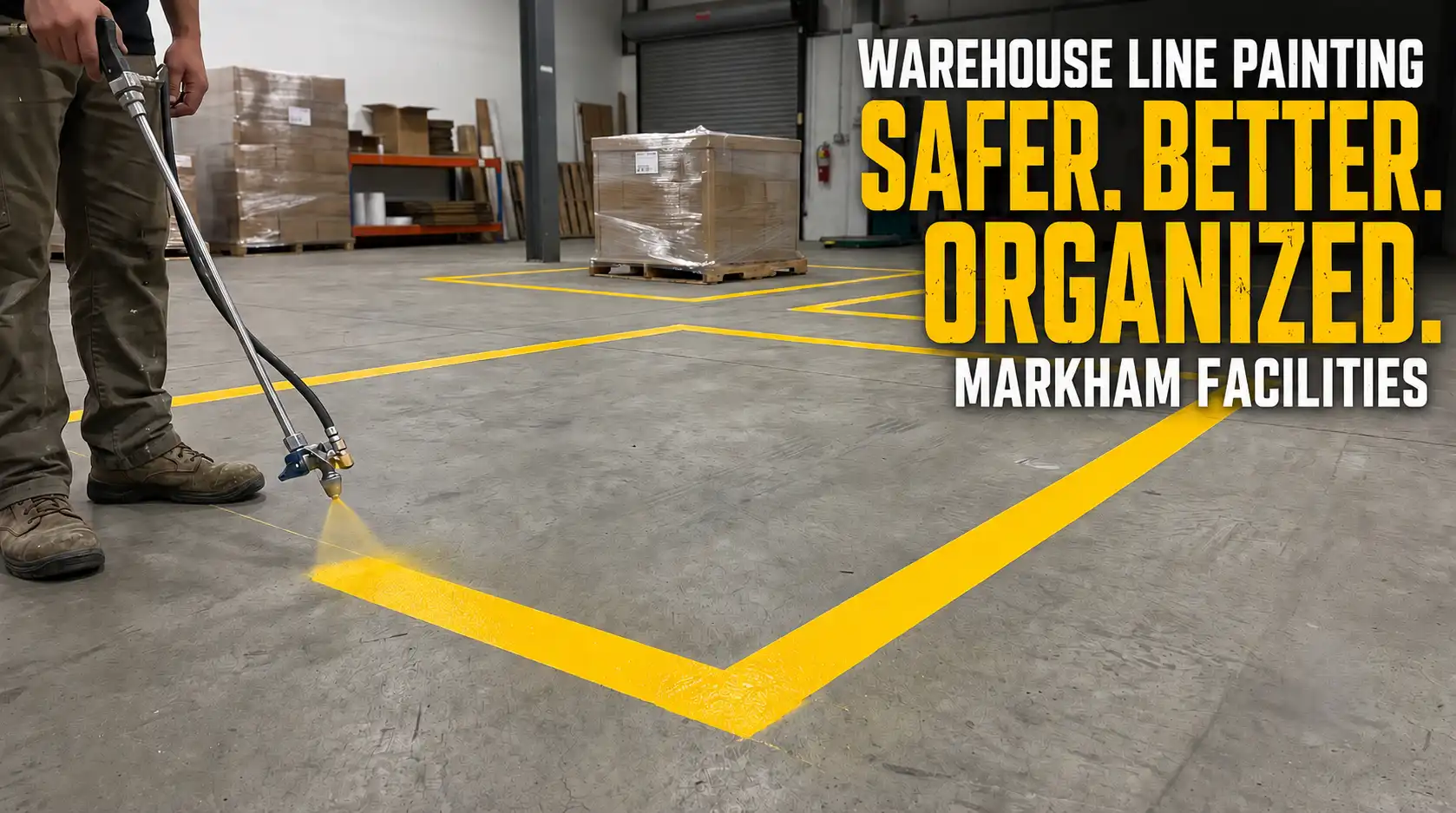
A warehouse floor is shared by people, equipment, inventory, and daily operations. The markings placed across that floor therefore need to correspond with how the facility actually functions. Forklift travel areas, pedestrian routes, staging spaces, loading areas, and equipment zones can each require a different marking purpose.
Easy Line Marking provides Warehouse Safety Line Painting in Markham for commercial and industrial facilities. Projects can range from repainting an established warehouse layout to developing markings for a renovated or reorganized facility. The starting point is identifying which areas need to be defined and how those markings relate to the site's operational requirements.
Which warehouse areas can be marked?
Warehouse line painting is not simply a matter of adding more lines to the floor. Each marking should correspond with a specific area or function within the facility.
Depending on the warehouse and its requirements, markings may be used for forklift travel lanes, pedestrian walkways, storage aisles, loading dock areas, shipping and receiving zones, staging areas, hazard zones, workstations, emergency exits, safety zones, equipment parking areas, and crosswalks.
The appropriate combination varies from facility to facility. A warehouse with substantial shipping and receiving activity may have different priorities from a property primarily used for storage. The layout should therefore reflect the areas that actually need to be identified.
Repaint the existing layout or create a new one?
This is one of the first decisions worth making before a warehouse marking project begins.
If the facility's existing arrangement continues to support current operations but its markings have become difficult to see, repainting may be appropriate. The established layout can be retained while the existing markings are refreshed.
A different approach may be necessary after a warehouse renovation, operational reconfiguration, or other change to how floor space is being used. In these situations, automatically repainting every old line could reproduce an arrangement that no longer matches the facility.
Easy Line Marking can handle both existing-layout repainting and new layout design, allowing the project to be planned according to current requirements rather than assuming every warehouse needs the same solution.
Start with how the warehouse actually operates
For a facility manager considering Warehouse Safety Line Painting in Markham, it is useful to identify the operational areas that need attention before deciding on the final marking scope.
Where do forklifts normally travel? Where are pedestrian walkways required? Which sections are used for staging or equipment parking? Are shipping and receiving activities clearly separated into designated areas? Have operational changes made parts of the existing layout less relevant?
These questions give the marking project a practical purpose.
They can also prevent unnecessary work. An existing area that continues to function effectively may simply need repainting, while another section of the same warehouse may require measurements and an updated layout.
What happens during a warehouse site assessment?
A site inspection gives the estimator or project manager an opportunity to evaluate the actual facility rather than developing the project around assumptions.
Easy Line Marking can review the existing layout and markings, measure areas that need to be marked, evaluate floor conditions, identify accessibility and safety requirements, and discuss the facility's operational needs.
The assessment can also help establish which areas require repainting and which may need a new layout.
Once these factors are understood, the project scope, scheduling requirements, and estimate can be considered with better information. This is particularly useful in active warehouses where the physical marking work has to fit around ongoing operations.
Planning around an active warehouse
Closing an entire facility for floor marking may not be practical.
Forklift movement, loading activity, shipping and receiving, inventory handling, and employee access can all affect when individual sections of a warehouse are available for work.
Where appropriate, Easy Line Marking can phase warehouse marking projects so that one section is addressed while other areas remain operational. Evening, weekend, or lower-activity periods may also be considered depending on the project.
This makes scheduling an important part of Warehouse Safety Line Painting in Markham. The question is not only what needs to be painted, but also how access to those areas can be coordinated with normal facility operations.
Preparing the floor before markings are applied
The condition of the floor matters because the new markings are being applied directly to that surface.
Confirmed preparation by Easy Line Marking may include cleaning dirt, dust, and debris, removing loose materials, and ensuring that the surface is dry. Required markings can then be measured and laid out, with masking or chalk guide lines used where necessary.
The exact preparation should depend on the condition of the facility rather than on a generic process applied to every warehouse.
Easy Line Marking uses waterborne traffic paint and solvent-based traffic paint for its confirmed line painting work. The appropriate approach can be considered according to the requirements identified for the project.
What information helps define the project?
Facility managers do not necessarily need a completed marking plan before contacting a contractor. However, providing relevant property information can make the initial discussion more productive.
Useful details can include:
- Property address and project location
- Approximate dimensions of the areas involved
- Current photographs
- Existing warehouse layout, if available
- Google Maps or satellite information where useful
- Types of markings required
- Floor or surface type
- Whether the work is repainting or a new installation
- Preferred project timeline
If the exact requirements are not yet known, the site assessment can help establish them.
This is preferable to guessing quantities or specifications before the facility has been properly reviewed.
What should a facility manager look for in a marking proposal?
A useful proposal should make it possible to understand what is actually being planned.
For example, is the contractor following an existing layout or creating a new one? Which operational areas are included? Have the necessary measurements been considered? Does the scope account for the existing floor condition? If the warehouse must remain active, has scheduling been discussed?
These details provide a practical way to evaluate Warehouse Safety Line Painting in Markham without relying on vague claims about quality or experience.
The proposal should correspond with the facility that was assessed. A warehouse project involving forklift lanes, pedestrian walkways, and staging areas should not be approached as though it were simply a collection of unrelated painted lines.
Plan markings around the facility, not the other way around
The most useful warehouse marking plan is one that reflects the areas and activities that actually exist inside the building.
For an established warehouse, that could mean restoring an effective existing layout. For a renovated or reorganized facility, it could mean measuring and planning new markings for changed operational areas. Some projects may contain both requirements.
Easy Line Marking approaches Warehouse Safety Line Painting in Markham by first understanding the site, the markings required, and the operational considerations surrounding the work.
If you are planning Warehouse Floor Markings in Markham, provide the available site details and project requirements so the scope can be reviewed.
Phone: +1 437-577-3547
Email: info@easylinemarking.ca
Ready to Get Started?
Request a free, no-obligation quote and our team will get back to you within one business day.
- Free on-site assessment — no obligation
- Fast response — usually within 1 business day
- Work scheduled around your business hours


