
Parking Lot Markings
What information should a line painter understand before marking your parking lot?
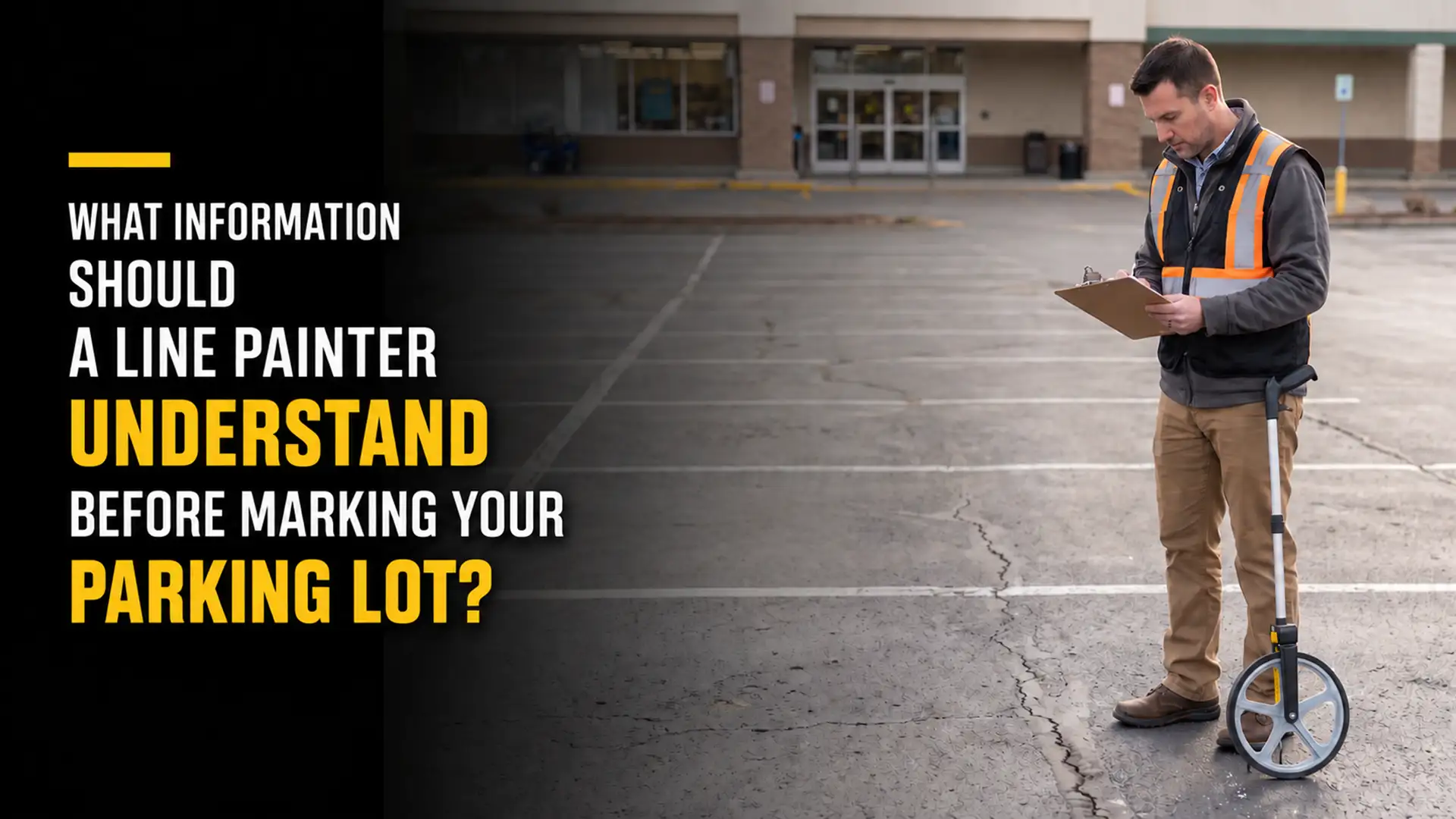
A parking lot can look simple from a distance: pavement, parking spaces, entrances, and painted lines. Once a marking project begins, however, each of those elements creates practical questions. Where should spaces be positioned? Which parts of the existing arrangement are still relevant? Are measurements available? What does the property actually require?
A Parking Lot Line Painter needs enough information to turn those questions into a workable scope. Easy Line Marking approaches private commercial properties by first understanding the physical site and the requirements behind the markings. The objective is not simply to put paint on pavement, but to establish what should be marked before application begins.
A drawing does not tell the entire story
Property plans, satellite views, and existing layouts can provide useful starting information. They can show the shape of a parking area and help identify where different parts of the property are located.
They cannot always answer every question about current site conditions.
Measurements may still need confirmation. Pavement condition needs to be considered. The way an existing layout appears on a drawing may not completely explain how the property is currently arranged.
This is why initial information and physical site conditions should be treated as two parts of the same project rather than assuming that a drawing alone defines the final scope.
How is the parking area actually used?
Before focusing on individual painted lines, it helps to establish the basic purpose of the area being marked.
A commercial parking lot may serve employees, customers, residents, visitors, service vehicles, or a combination of users depending on the property. Different parts of a larger site may also serve different functions.
Understanding the property does not mean inventing a complicated marking system. It means identifying the areas that genuinely need to be included.
This gives the Parking Lot Line Painter a clearer foundation for determining what needs to be measured, laid out, and painted rather than treating every paved area as identical.
Which requirements are already confirmed?
Some projects begin with clear instructions. The property manager may already have an existing layout, known dimensions, photographs, or specific areas that require work.
Other projects begin with much less information.
Separating confirmed details from assumptions is useful at this stage. If the property has an existing plan, it can be reviewed. If dimensions are approximate, they should be treated as approximate until the relevant measurements are established.
Easy Line Marking can work with both existing arrangements and new layouts. Knowing which situation applies helps define what needs to happen before painting can proceed.
What should each marked area accomplish?
Every marking should have a clear function on the property.
Parking stalls, directional markings, crosswalks, accessible spaces, loading areas, or other required pavement markings should not be added simply because there is available pavement.
Instead, consider what each marked area needs to communicate to people using the property.
This purpose-first question helps keep the layout connected to the actual site. It can also reveal when a property requires more planning than simply following marks already visible on the pavement.
The final scope should reflect what the parking lot requires, not an arbitrary quantity of painted lines.
What can photographs tell the contractor?
Photos are particularly useful during an initial project discussion.
They can provide context about the parking area, existing markings, pavement, and general property arrangement. Several photos taken from different positions are usually more informative than one tightly cropped image of a single line.
A Google Maps or satellite view can provide another perspective by showing the broader site.
These materials do not replace measurements or an on-site review when those are required. They help communicate the project clearly enough to identify what information is already available and what still needs to be established.
Which details require an on-site assessment?
Some questions cannot be answered reliably from photographs or descriptions.
Easy Line Marking site inspections are typically completed by an experienced estimator or project manager. During the assessment, the property layout can be reviewed, relevant areas measured, pavement conditions evaluated, and accessibility and safety requirements identified.
Operational needs can also be discussed.
This allows a Parking Lot Line Painter to work from information connected directly to the property rather than relying entirely on assumptions made before seeing the site.
The assessment can then help determine the marking solution, project scope, scheduling requirements, and estimate.
Is the existing arrangement still the intended layout?
An existing parking lot does not automatically mean the project should simply reproduce everything already visible.
The first question is whether the current arrangement remains the layout the property requires.
If it does, the project may involve working with that established arrangement. If the property has been newly paved, reconfigured, or otherwise requires a different parking arrangement, a new layout may be appropriate.
Easy Line Marking provides both repainting of existing layouts and new layout design.
Determining which path applies should happen before the application stage because it affects measurements, positioning, and the overall project scope.
What does the pavement tell you?
The surface itself is another part of the project.
Before painting, the pavement condition should be evaluated rather than assuming every area is ready for immediate application. Easy Line Marking's confirmed preparation can include cleaning dirt, dust, and debris, removing loose material, and ensuring the surface is dry.
Required markings can then be measured and laid out. Masking or chalk guide lines may be used where necessary.
Easy Line Marking works with waterborne traffic paint and solvent-based traffic paint. The project requirements and site conditions can be considered when determining the appropriate approach.
How much of the property is actually included?
Scope can become unclear when a property contains several paved sections.
A request described simply as “paint the parking lot” may leave unanswered questions. Does the project involve one parking section or several? Are additional designated pavement areas part of the work? Is the requirement limited to an established arrangement, or does it involve layout changes?
Defining the boundaries of the project helps avoid relying on assumptions about what is included.
Approximate dimensions, photographs, the property address, an existing plan, and a satellite view can all help communicate the intended work before more detailed measurements are completed.
Does the work need to fit around property operations?
Commercial properties do not stop functioning simply because marking work is required.
Access, vehicles, customers, employees, tenants, deliveries, and other site activity may affect when sections of pavement are available.
This makes the preferred project timeline useful information during planning. Rather than considering scheduling only after everything else has been decided, property managers can explain relevant operational needs early in the discussion.
The Parking Lot Line Painter can then consider the required work together with the conditions under which the property operates.
What information is useful when making an enquiry?
You do not need a complete technical specification before contacting Easy Line Marking.
Useful starting information can include:
- Property address and project location
- Approximate dimensions
- Photos of the area
- Google Maps or satellite view
- Existing layout, if available
- Type of markings required
- Surface type
- Whether it is a new installation or existing-layout project
- Preferred project timeline
Providing what you already know is more useful than guessing at details that have not yet been confirmed.
The painter should understand the project before the paint is applied
A commercial Parking Lot Marking project involves more than selecting paint and deciding when work can begin. The property, intended layout, measurements, pavement condition, marking requirements, and scope all contribute to what ultimately needs to be placed on the surface.
That is why the work before application matters.
A Parking Lot Line Painter should understand which requirements are already established and which details still need to be determined. Easy Line Marking can review the relevant property information, conduct a site assessment where required, and develop the scope around the actual conditions of the private commercial property.
For a parking lot marking enquiry, share the information you currently have rather than trying to solve every layout question yourself.
Easy Line Marking
Phone: +1 437-577-3547
Email: info@easylinemarking.ca
Ready to Get Started?
Request a free, no-obligation quote and our team will get back to you within one business day.
- Free on-site assessment — no obligation
- Fast response — usually within 1 business day
- Work scheduled around your business hours


