
Line Markings
What type of line painting does your property actually need?
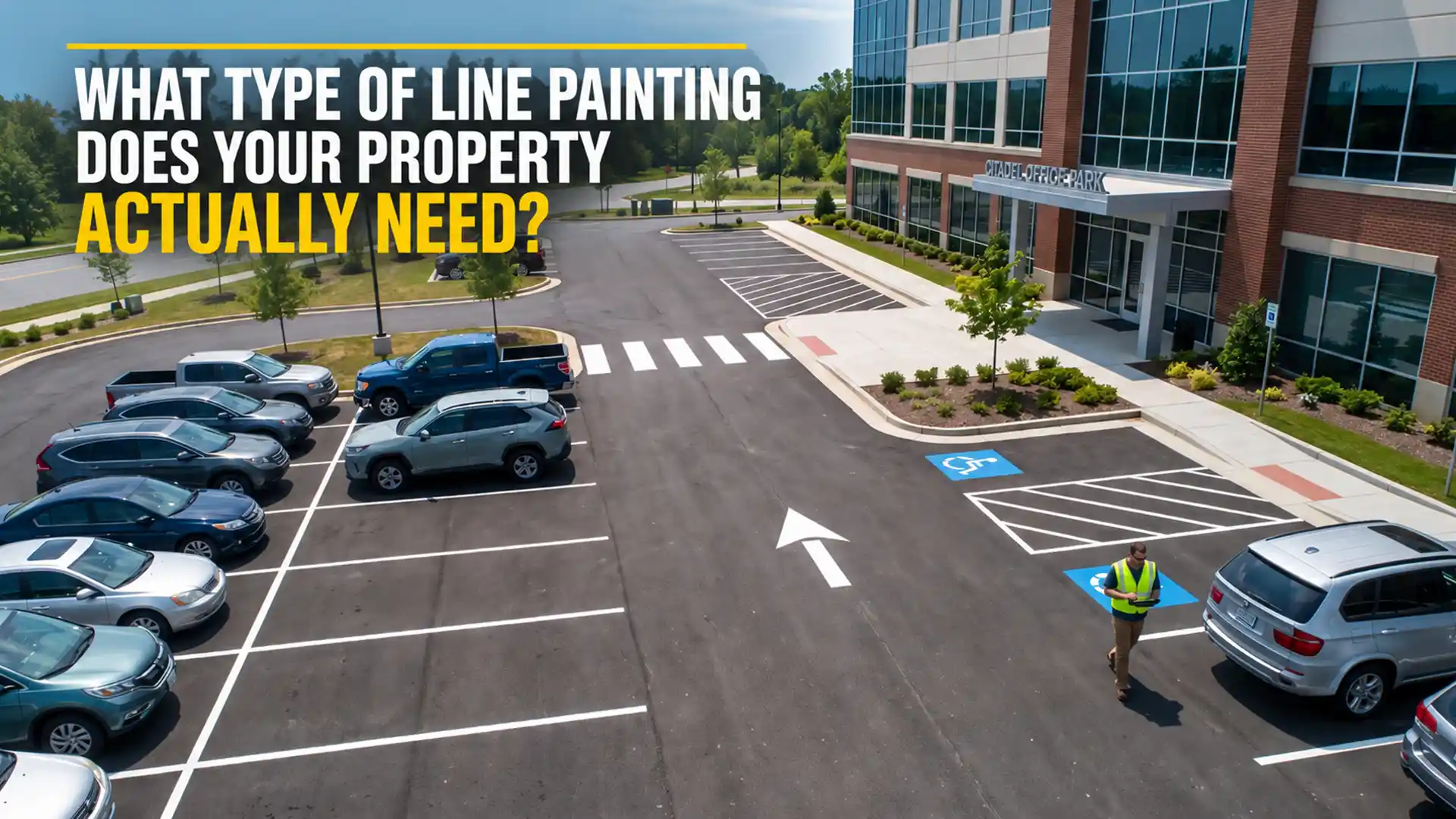
Someone searching for Line Painting may already know that a property needs clearer markings but may not know which service fits the project. A parking lot, warehouse, industrial floor, private vehicle area, and sports court all use painted markings differently.
Easy Line Marking works on private commercial and industrial properties, helping property and facility managers define the scope around the actual space. Instead of beginning with paint selection or the number of lines required, it is more useful to identify where the work will happen and what the markings need to communicate.
Are you managing a commercial parking lot?
Commercial parking lots are primarily designed around vehicle parking and movement. The marking requirements can include parking stalls and other designated pavement areas that need to be clearly identified for people using the property.
Start by considering how the parking area currently functions. A property with an established layout presents a different requirement from a newly paved or reconfigured area where a new layout may be necessary.
Easy Line Marking can work with existing layouts or design new ones when required. The important first step is establishing what the property needs rather than assuming that every commercial parking lot should follow the same project scope.
Your likely service: Commercial parking lot painting.
Is the project inside a warehouse?
Warehouse floors serve operational purposes that are very different from outdoor parking areas. Markings may need to identify spaces used by employees, forklifts, stored goods, equipment, and shipping or receiving activities.
Depending on the facility, relevant areas can include pedestrian walkways, forklift travel lanes, storage aisles, staging areas, loading dock areas, shipping and receiving zones, equipment parking areas, workstations, crosswalks, hazard zones, safety zones, and emergency exits.
A warehouse does not automatically need every type of marking. The appropriate Line Painting should reflect the areas and activities that actually exist within that particular facility.
Your likely service: Warehouse floor painting.
Does your industrial floor have several different functions?
Industrial floors often support several activities within the same building. Equipment may occupy one section while another is used for staging, storage, pedestrian movement, forklift travel, or workstation activity.
The useful question is not how many areas can be painted. It is which areas need to be visibly defined.
For example, an equipment parking area should correspond with a real equipment location. A staging zone should represent space genuinely used for staging. The same purpose-first thinking applies to walkways, crossings, workstations, and other operational areas.
Identifying these functions before determining the final scope helps keep the markings relevant to everyday use.
Your likely service: Industrial floor marking.
Does your private property include internal vehicle routes?
Some commercial properties contain more than a conventional parking lot. Vehicles may enter the site and continue along private driving areas before reaching buildings, parking sections, or other destinations.
This can occur on industrial properties, office parks, condo roads, private campuses, and other privately managed sites.
These internal routes need to be distinguished from public streets. Easy Line Marking focuses on private commercial and industrial properties rather than municipal roads or public highways.
When a private site includes both internal vehicle routes and parking areas, each part should be considered according to its function instead of treating all paved surfaces as one type of space.
Your likely service: Private-property pavement marking.
Is your project a sports court?
Sports courts represent another distinct use for painted markings. The purpose is not to organize vehicle movement or warehouse operations, but to establish the markings required for the intended court.
This means the project should be identified correctly from the beginning rather than grouped with parking lot or industrial work simply because paint is being applied to a surface.
When discussing a sports court project with Easy Line Marking, providing the type of court, location, existing condition, and area requiring work can help establish the initial requirement.
Your likely service: Sports court painting.
What if your property has more than one type of area?
Larger commercial properties do not always fit neatly into a single service category. One site might contain an outdoor parking lot, private driving areas, and an indoor warehouse or industrial facility.
In that situation, think about each area according to its individual purpose.
The outdoor parking section should address parking requirements. Internal vehicle routes should be evaluated as driving areas. Inside the facility, floor markings should correspond with operational needs.
This approach creates a clearer project definition without forcing unrelated spaces into the same marking plan. It also helps identify which areas may require different measurements, layouts, preparation, or scheduling considerations.
What are the markings supposed to communicate?
After identifying the space, determine what people should understand when they encounter the marking.
In a parking lot, that may mean recognizing where vehicles should park. Inside a warehouse, the requirement might involve identifying a pedestrian walkway, forklift lane, staging area, crossing, or equipment zone.
This question provides a practical filter for Line Painting projects. If the purpose of a proposed marking cannot be clearly explained, the area may need further consideration before it becomes part of the scope.
The objective is not to fill unused pavement or floor space with paint. Each marking should correspond with an identifiable property or operational requirement.
What if you know the problem but not the solution?
Property and facility managers do not need to determine every measurement or layout detail before contacting Easy Line Marking.
Site inspections are typically performed by an experienced estimator or project manager. During an assessment, the team can review the layout, measure areas to be marked, evaluate pavement or floor condition, identify accessibility and safety requirements, and discuss operational needs.
This process can help determine whether the project involves an existing arrangement or requires a new layout. It also provides a more reliable basis for establishing project scope, scheduling, and an estimate than trying to make every decision before the property has been properly evaluated.
What happens when the facility cannot simply stop operating?
Scheduling can be particularly important for active warehouses. A facility may still need to manage employees, forklifts, equipment, storage, and shipping or receiving activities while marking work is being planned.
Where appropriate, Easy Line Marking can phase warehouse work so sections of the facility remain operational. Evening, weekend, or lower-activity periods may also be considered depending on project requirements.
Planning around operations can therefore form part of the project discussion. It helps connect the physical marking work with how the property actually functions rather than considering the floor independently from the people and activities using it.
Which paint does Easy Line Marking use?
Easy Line Marking works with waterborne traffic paint and solvent-based traffic paint. The appropriate approach depends on the project requirements and conditions identified for the property.
Preparation can include cleaning dirt, dust, and debris, removing loose material, and making sure the surface is dry. Areas can then be measured and laid out, with masking or chalk guide lines used where required.
These practical steps are part of turning a planned layout into accurately positioned markings. The exact scope should be determined from the project rather than assuming that every surface requires the same preparation or application process.
Still not sure which service fits?
You can begin an enquiry without having every technical detail worked out. Start with the property address, the type of area requiring work, what needs to be marked, and whether the project involves an existing arrangement or a new installation.
Approximate dimensions, photographs, an existing layout, and a Google Maps or satellite view can provide useful context. A preferred project timeline can also help explain operational requirements.
For a Line Painting project, these details give Easy Line Marking a clearer picture of what you are trying to accomplish while leaving measurements and site-specific decisions to the appropriate assessment process.
Start with the property, then choose the service
Different properties require different marking solutions. A commercial Parking Lot Marking is not planned like a warehouse floor, and an industrial facility has different operational requirements from a sports court or private driving area.
Start by identifying the environment, the people or vehicles using it, and what the markings need to communicate. That makes it easier to determine the appropriate service and establish a project scope based on real requirements.
Easy Line Marking can assess relevant areas, measurements, surface conditions, layout requirements, and operational considerations before recommending an appropriate Line Painting solution for a private commercial or industrial property.
Easy Line Marking
Phone: +1 437-577-3547
Email: info@easylinemarking.ca
Ready to Get Started?
Request a free, no-obligation quote and our team will get back to you within one business day.
- Free on-site assessment — no obligation
- Fast response — usually within 1 business day
- Work scheduled around your business hours


