
Warehouse Safety
When should a facility add new safety markings instead of more signs?
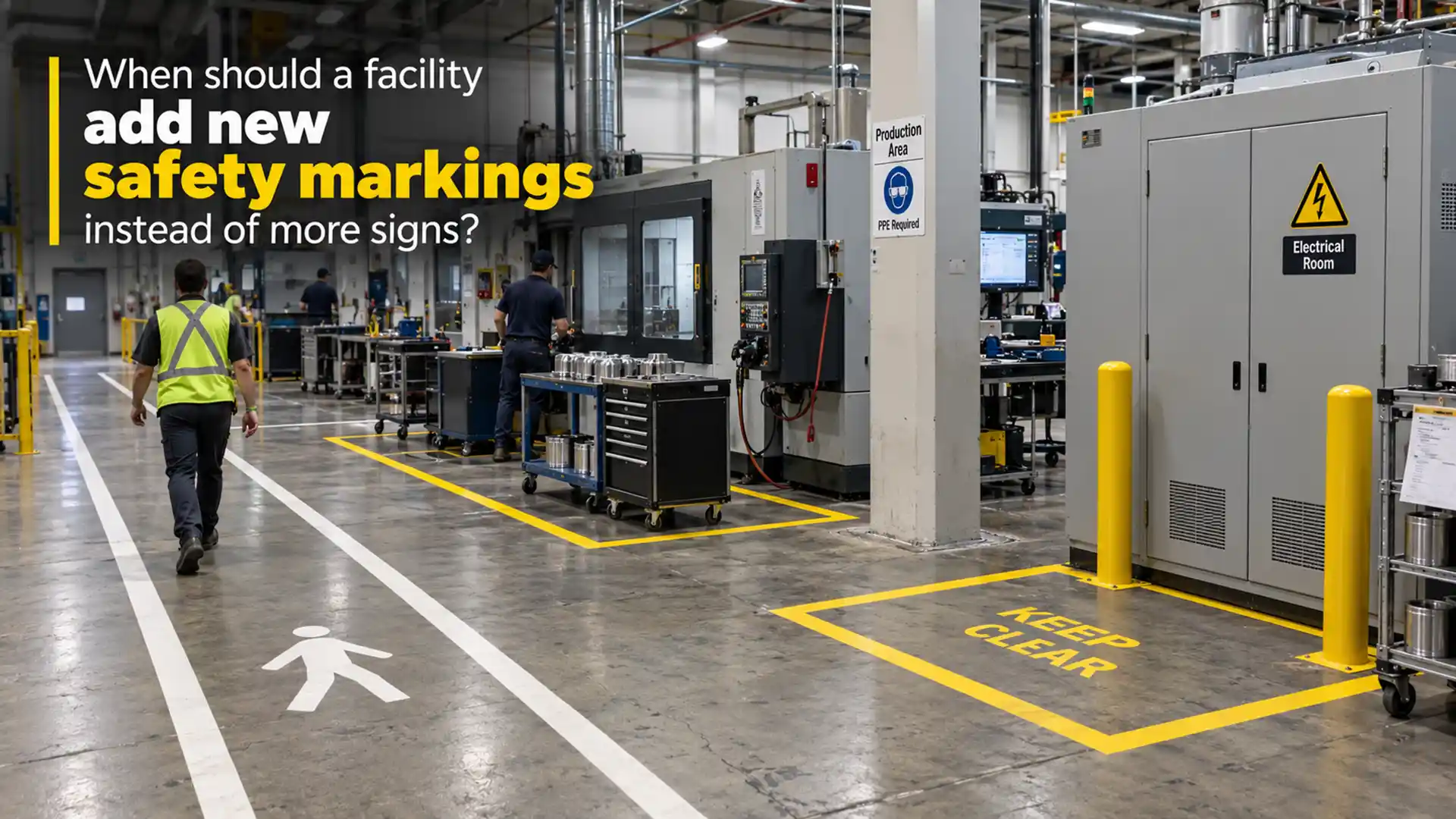
A sign and a floor marking communicate in different ways. A sign provides information at a specific location. A painted line can define an area directly on the surface where people, equipment, and daily activity are taking place. The question for a facility manager is not which one is universally better. It is where a floor marking has a clear purpose.
That is a useful starting point when considering Safety Line Painting Services in Newmarket. Easy Line Marking works with private commercial and industrial facilities where markings may be needed for pedestrian walkways, forklift travel lanes, loading areas, staging zones, equipment areas, and other defined spaces.
Instead of adding paint everywhere, consider the facility one location at a time.
Where are pedestrians expected to move?
Start with the parts of the facility used by people on foot.
A pedestrian walkway has a specific purpose: it identifies an area intended for pedestrian movement. That makes it different from adding a general warning sign somewhere nearby.
Look at where employees or other facility users need to travel. Consider how those routes relate to workstations, operational areas, and other parts of the building.
Easy Line Marking can include pedestrian walkways within warehouse and industrial marking projects where they are required.
The important point is that the walkway should correspond with the facility's actual requirements. A painted pedestrian route should not be added simply because another warehouse has one in a similar-looking location.
Where do forklifts normally travel?
Now consider equipment movement separately.
Forklift travel lanes can identify areas intended for forklift movement within a facility. Their purpose is different from pedestrian markings, even though both may exist on the same industrial floor.
Facility managers considering Safety Line Painting Services in Newmarket should therefore look at where forklifts are actually expected to operate rather than treating the entire open floor as one movement area.
Ask where regular forklift travel takes place and how those areas relate to storage, staging, loading, and other operational zones.
That provides a more useful basis for deciding where a defined forklift travel lane may be relevant.
What happens where different movements meet?
Some locations deserve additional attention because two different uses of the floor come together.
A pedestrian route and a forklift travel area, for example, are not independent if their paths interact. Crosswalks may be relevant where a designated crossing is required.
The important question becomes:
What should someone understand at this specific point on the floor?
This location-based approach is more useful than deciding that the facility simply needs “more safety lines.”
Easy Line Marking can review traffic flow, operational needs, accessibility and safety requirements during a site assessment. That helps connect individual markings to the conditions and movement patterns present in the facility.
Do loading areas need clearer boundaries?
Loading areas introduce another type of activity.
Employees, equipment, goods, and vehicles may all be involved in the broader loading or shipping process. Depending on the facility, markings may be required for loading dock areas or shipping and receiving zones.
These spaces should be evaluated according to their actual function.
Rather than asking how much paint can fit around a loading area, determine which parts of the floor need to be visibly identified. A marking should communicate something useful about where one activity is intended to occur.
This keeps safety line painting connected to operations rather than turning it into a decorative layer on the floor.
Are staging and storage being treated as the same space?
They do not necessarily serve the same purpose.
A staging area can identify space allocated to a particular stage of an operation, while storage aisles relate to another function. If the facility needs those areas defined, their markings should reflect the distinction.
This is where facility managers can benefit from examining the floor by activity rather than available space.
Before requesting Safety Line Painting Services in Newmarket, identify which areas have distinct operational roles. This can help make the initial project discussion more specific.
It also reduces the temptation to create boxes, lines, or zones without a clear reason for them to exist.
Does equipment have a defined place?
Equipment parking is another possible use of industrial floor markings.
If equipment has designated parking areas within a facility, markings can identify those spaces as part of the broader floor plan.
The same principle applies to workstations, hazard zones, and safety zones: their inclusion should be based on what the individual facility requires.
Not every building needs every available type of marking.
A useful floor-marking project therefore starts by identifying the relevant operational areas and excluding markings that do not serve a defined purpose.
This purpose-first approach can keep the finished floor easier to interpret.
What about emergency exits and other safety areas?
Easy Line Marking can also mark emergency exits and safety zones where these areas form part of the facility's marking requirements.
However, a floor marking should not be treated as a universal replacement for every other safety measure or communication method used by a facility.
The scope of the line-painting project should remain focused on the areas that require pavement or floor markings.
If a facility manager is unsure what should be included, an on-site assessment can help identify the physical areas involved and establish the marking requirements that fall within the project.
This keeps the discussion grounded in the actual facility rather than assumptions.
Use a simple test before adding another marking
Before putting a new line or zone on the floor, ask three questions:
- What area are we defining?
- Who needs to recognize it?
- What should the marking communicate?
If those questions have clear answers, the proposed marking has a defined operational purpose.
If the answers are unclear, the area may need further review before paint is applied.
This simple test is useful because industrial floors can become visually complicated when markings accumulate without a clear relationship to current operations.
For Safety Line Painting Services in Newmarket, purposeful selection is more valuable than simply maximizing the number of marked areas.
When does professional assessment become useful?
A facility manager usually understands how the operation works, but translating those requirements into a physical marking layout can require measurements and site review.
Easy Line Marking site inspections are typically completed by an experienced estimator or project manager. The assessment can include reviewing the existing layout, measuring areas to be marked, evaluating floor conditions, identifying accessibility and safety requirements, and discussing operational needs.
The team can then determine the project scope and consider scheduling requirements.
Easy Line Marking can work with an existing arrangement or design a new layout where the facility requires one.
Can the work fit around normal facility activity?
Marking the correct areas is only useful if the project can also be coordinated with the site.
Warehouses and industrial facilities may need to continue operating while floor work is planned. Where appropriate, Easy Line Marking can phase warehouse marking so sections remain operational while other areas are addressed.
Evening, weekend, or lower-activity periods may also be considered according to project requirements.
Easy Line Marking uses waterborne traffic paint and solvent-based traffic paint. Confirmed preparation may include cleaning dirt, dust, and debris, removing loose materials, ensuring the surface is dry, measuring and laying out markings, and using masking or chalk guide lines where required.
Give every safety marking a clear job
The purpose of an Industrial Floor-Marking project is not to put a line around every available area.
A pedestrian walkway should identify pedestrian space. A forklift travel lane should correspond with forklift movement. Staging, loading, equipment, storage, hazard, and other zones should be included when the facility actually needs those areas defined.
For facility managers researching Safety Line Painting Services in Newmarket, that provides a practical way to begin: walk through the operation and identify the locations where the floor itself needs to communicate a specific purpose.
Easy Line Marking can then assess the relevant areas, take measurements, review site conditions, and develop the marking scope around the facility's requirements.
Phone: +1 437-577-3547
Email: info@easylinemarking.ca
Ready to Get Started?
Request a free, no-obligation quote and our team will get back to you within one business day.
- Free on-site assessment — no obligation
- Fast response — usually within 1 business day
- Work scheduled around your business hours


