
Industrial Marking
What happens when a warehouse layout stops matching the way it operates?
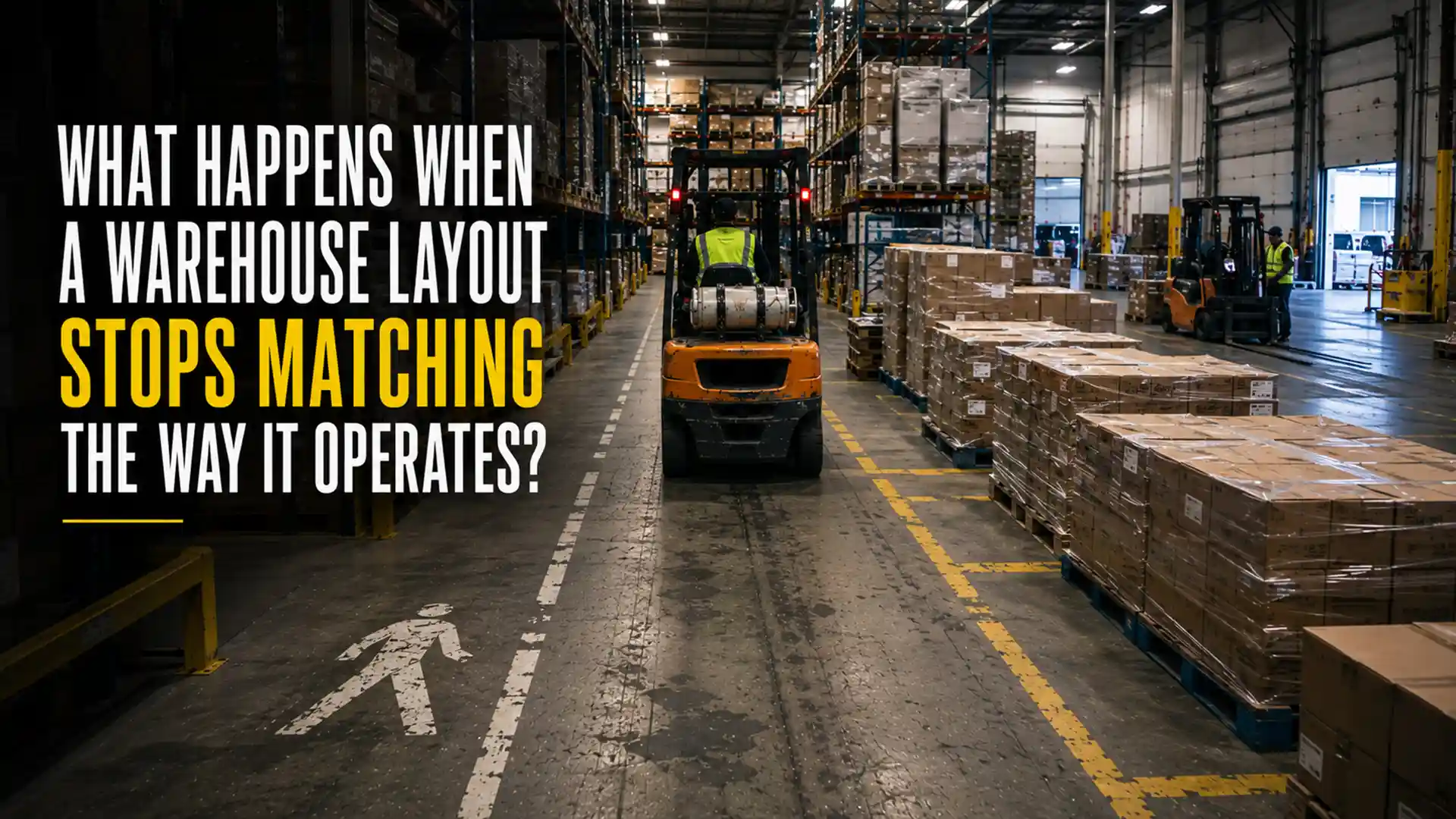
A warehouse can change considerably without its floor markings changing with it. Storage areas expand, delivery patterns shift, equipment moves, and employees gradually develop different routes through the facility. What once worked efficiently can eventually become less practical, even though the original layout may still look perfectly organised.
Easy Line Marking approaches industrial marking projects by looking at how the property is actually being used before recommending an approach. For businesses considering Industrial Line Marking in Caledon, that means looking beyond faded paint and considering the existing layout, traffic movement, surface condition, operational requirements, and the way employees and equipment move through the facility.
The goal isn't automatically to add more lines or replace everything that already exists. It is to understand whether the current markings still support the way the business operates today.
The warehouse had changed, but the floor had not
The facility manager hadn't deliberately changed the layout. The changes had happened gradually.
A storage area had expanded. More deliveries were arriving at certain times. Equipment was being parked in a different location, and employees had developed new walking routes to avoid busy operating areas.
The floor markings, however, were still based on an older version of the operation.
This is easy to overlook because painted lines don't change when a business changes. They stay where they were originally placed until somebody decides to review them.
Small habits can reveal a larger layout problem
The facility manager began paying attention to what employees were actually doing rather than what the floor plan suggested they should be doing.
Several patterns became noticeable:
- Forklifts were taking wider routes around certain storage areas.
- Employees were avoiding one pedestrian path during busy periods.
- Temporary staging was appearing in an area intended for another purpose.
- Delivery vehicles were occasionally competing for the same operating space.
- Equipment was being left in places that reduced usable movement space.
None of these observations alone proved that the floor markings were wrong.
Together, however, they suggested that the operation had moved beyond the assumptions behind the original layout.
This is where the obvious answer can be misleading
The first instinct might be to repaint the faded lines.
That would certainly make the existing markings more visible. But visibility wasn't necessarily the only issue.
If a forklift route no longer reflects the way materials move through the facility, repainting the same route won't change that. If a pedestrian path is regularly avoided because of nearby activity, simply making the line brighter won't necessarily make the route more practical.
For Industrial Line Marking in Caledon, this distinction matters. The first question should be whether the current markings still make sense for the operation. The second is whether those markings need to be refreshed.
Walk the floor during a normal shift
A floor can tell a very different story when the facility is operating.
Instead of reviewing the layout when the warehouse is empty, the manager walked through the facility during an ordinary working period. The movement of people, forklifts, inventory, and deliveries became much easier to understand.
Certain areas were consistently busy.
Other areas had more available space than expected.
Some routes that looked perfectly reasonable on paper were rarely used in practice.
That type of observation can be more valuable than assuming that every existing line is still serving its original purpose.
Look at movement before appearance
Floor markings are highly visible, so it is natural to focus on whether they look clean, straight, or faded.
But an industrial floor is also a working environment.
Markings can help distinguish movement routes, storage areas, pedestrian paths, equipment locations, loading areas, and other operational spaces. Their usefulness depends on whether employees can understand and follow what they are communicating.
That is why Industrial Line Marking in Caledon should be considered alongside the actual movement patterns inside a facility.
A visually neat layout isn't necessarily an effective one.
Changes don't always mean a complete redesign
There is another important point.
A facility does not need to be completely reorganised every time operations change. Sometimes only a small part of the floor has become outdated.
For example, a business may have changed the location of a staging area while most of the warehouse continues to function exactly as intended. In that situation, changing everything could create unnecessary disruption.
The better approach is to identify what has actually changed and determine how much of the existing arrangement still works.
Easy Line Marking can assess existing layouts and discuss whether repainting, adjustments, or a new layout is appropriate based on the property's requirements.
What should a facility manager observe?
Rather than immediately deciding what needs to be painted, spend some time watching the operation.
Look for:
- Places where forklifts regularly slow down or change direction
- Pedestrian routes that employees naturally prefer
- Areas where temporary materials frequently accumulate
- Equipment that repeatedly ends up outside its designated area
- Loading or staging spaces that become crowded
- Routes that become difficult to follow during busy periods
These aren't automatic signs that a new marking layout is required.
They are clues.
The value comes from identifying patterns and then determining why those patterns are happening.
The busiest period may reveal the real problem
A warehouse can appear perfectly organised early in the morning and become completely different when deliveries arrive and employees are moving inventory.
That is when competing movements become easier to see.
A forklift may need to cross a pedestrian route. A staging area may become temporarily occupied. A delivery vehicle may require access while employees are moving materials nearby.
This is why Industrial Line Marking in Caledon should be considered in the context of actual operating conditions rather than only during a quiet inspection.
The layout needs to make sense when the facility is working hardest.
Surface condition still matters
Once the appropriate areas have been identified, the physical condition of the surface becomes another consideration.
Before marking work, Easy Line Marking may clean dirt, dust, and debris, remove loose materials, ensure the surface is dry, measure the areas to be marked, and use masking or chalking guide lines where required.
These preparation steps are practical rather than decorative. They help establish a suitable surface and provide a clear basis for laying out the intended markings.
The important point is that preparation follows the assessment of what actually needs to be marked.
Ask whether the floor communicates clearly
A useful test is to imagine someone unfamiliar with the facility walking through it for the first time.
Would they understand where people are expected to walk?
Would designated operating areas be obvious?
Would the intended routes make sense without someone explaining them?
Would equipment and staging areas be distinguishable from normal movement space?
If the answers are unclear, the problem may not simply be faded paint.
It may be that the floor is no longer communicating the way the operation currently works.
A layout should support the operation, not fight it
The facility manager in our example didn't need more lines simply because the existing ones were old.
The facility needed markings that reflected the way the business had evolved.
That meant looking at actual movement patterns, understanding where the operation had changed, identifying which existing areas still worked, and determining where the floor layout needed attention.
This is the more practical way to approach Industrial Line Marking in Caledon. Start with the operation, then determine what the markings need to accomplish.
What makes a professional assessment useful?
A useful assessment isn't simply a walk around the property followed by a list of areas to paint.
It should consider how the space is being used, what the customer wants to achieve, which existing markings remain relevant, and whether the surface and layout are suitable for the proposed work.
At Easy Line Marking, site assessments are carried out by an experienced estimator or project manager who evaluates the property's layout, existing markings, traffic flow, surface condition, and project requirements before recommending an approach.
That process gives the customer a chance to discuss what is actually happening inside the facility before decisions are made.
The real warning sign isn't always faded paint
Sometimes the clearest warning sign is behaviour.
When people repeatedly avoid a marked route, forklifts take unexpected paths, temporary storage keeps appearing in designated movement areas, or employees develop their own ways of navigating the floor, it may be worth asking why.
The markings could be outdated.
The operation could have changed.
Or the two may simply no longer fit together as well as they once did.
For Industrial Line Marking in Caledon, recognising that distinction can prevent a facility from simply repainting an arrangement that no longer reflects its current needs.
A better starting point for facility managers
Before deciding what should be repainted, watch the facility while it is working. Look at movement, congestion, pedestrian behaviour, staging, equipment placement, and the areas where employees have developed workarounds.
Then compare those observations with the existing floor layout.
If the two no longer match, that is the point at which a professional assessment becomes valuable. Easy Line Marking can review the existing arrangement and help determine whether the appropriate direction is to refresh the current markings or consider changes to the layout.
Good Industrial Line Marking in Caledon should ultimately make the working environment easier to understand and navigate.
The paint is only the visible part.
The more important question is whether the Floor Markings still make sense for the business using the space every day.
A practical takeaway
A warehouse doesn't have to look chaotic before its floor layout deserves attention. Small, repeated behaviours can be enough to show that the operation has moved beyond an older arrangement.
Watch what happens during a normal shift, identify where the actual movement differs from the intended movement, and use those observations to guide the next decision.
Easy Line Marking can be reached at +1 437-577-3547 or info@easylinemarking.ca to discuss an industrial marking project and the property's specific requirements.
Ready to Get Started?
Request a free, no-obligation quote and our team will get back to you within one business day.
- Free on-site assessment — no obligation
- Fast response — usually within 1 business day
- Work scheduled around your business hours


