
Parking Lot Markings
How do you know where each parking stall should begin and end?
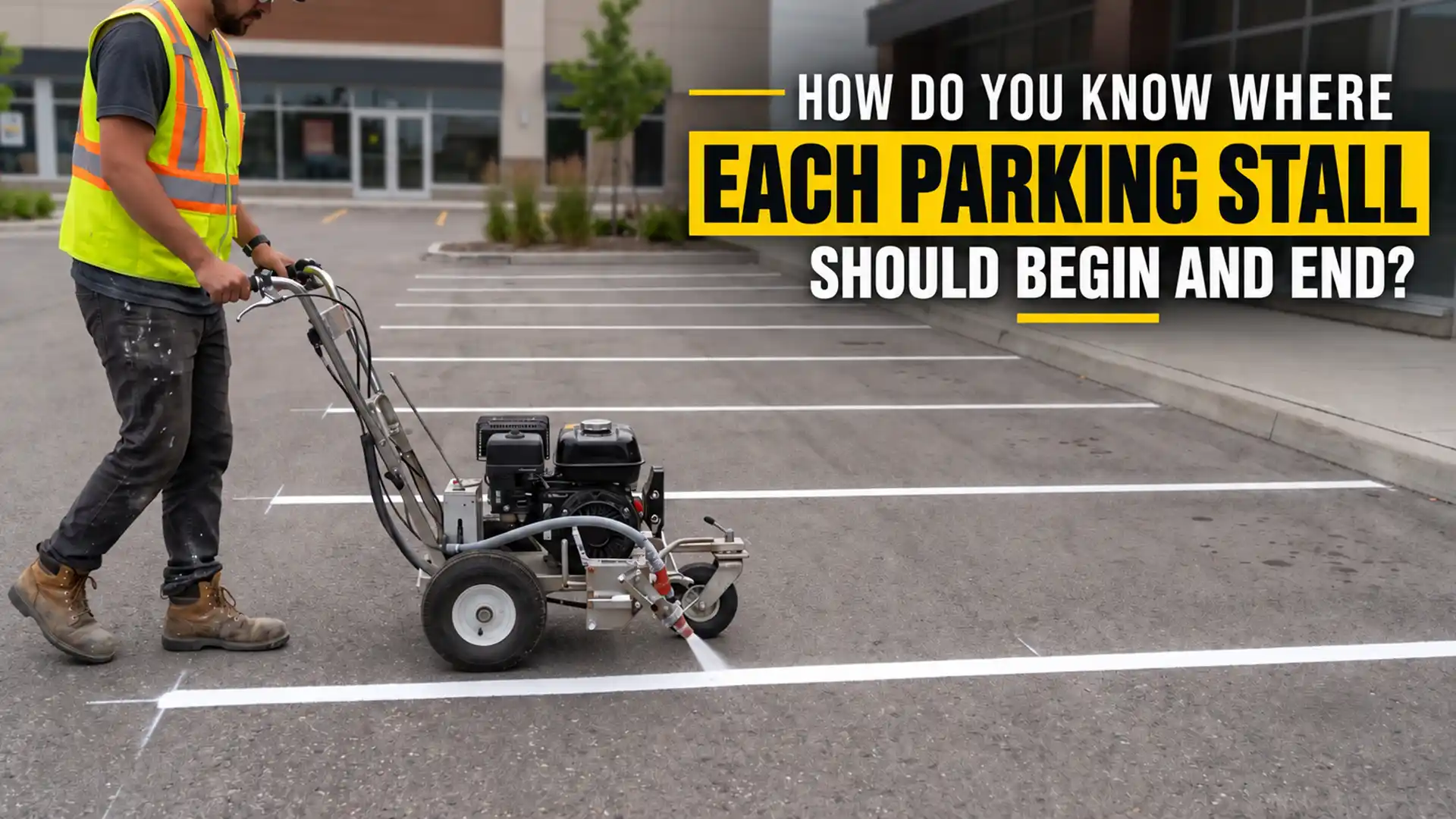
A parking row is made up of individual stalls, but the accuracy of the entire arrangement depends on how those stalls are positioned. If the first boundary is incorrectly placed or measurements change along the row, the finished markings may not match the intended layout.
For property managers considering Parking Stall Painting in Whitby, understanding how individual spaces are established is an important part of planning the project. Easy Line Marking can review the property, measure relevant areas, and determine the appropriate layout before markings are applied.
The process begins with a simple question: where should the first stall start?
Every parking stall needs defined boundaries
A parking stall is more than an empty section of pavement. Its painted boundaries identify the area intended for an individual vehicle.
Those boundaries need to correspond with the parking layout established for the property.
The position of one stall also affects the spaces beside it. A boundary may form part of the arrangement for two neighbouring stalls, making its placement relevant to more than one parking space.
This is why individual markings should not be treated as isolated lines.
During Parking Lot Line Painting, the intended arrangement provides the reference for positioning each stall within the wider parking area.
Where should the first stall begin?
The first stall establishes an important reference for the remaining spaces in a row.
Its position should be determined from the intended layout and actual property measurements rather than selected simply because an area of pavement appears suitable.
Easy Line Marking can review existing layouts or develop new arrangements where required. The relevant areas can then be measured to establish the positions of the markings.
Once the starting position has been determined, the remaining stall boundaries can be laid out according to the confirmed arrangement.
A reliable starting reference helps the individual spaces form a consistent row rather than becoming a series of independently positioned markings.
Why consistent measurements matter
Parking stall boundaries need to follow the dimensions established for the project.
If measurements are not applied consistently, differences can accumulate across a row. Even when individual markings appear relatively straight, the overall arrangement may not match the intended layout.
The correct dimensions should be determined from the property's applicable requirements and approved layout. A single assumed measurement should not automatically be applied to every commercial parking lot.
A professional Parking Lot Line Painter can establish the relevant measurements during the layout process.
This helps ensure that each stall is positioned according to the project requirements rather than relying on visual estimates.
Think about the complete row, not just one space
An individual stall may appear correctly positioned when viewed on its own. However, its placement also needs to make sense within the complete row.
The row should be considered as a connected arrangement of parking spaces.
This means the starting position, individual boundaries, and overall layout should be established together. Decisions about one space should not create uncertainty about the position of the next.
For Parking Stall Painting in Whitby, reviewing the entire row before application helps connect individual measurements with the intended parking arrangement.
It also allows layout questions to be addressed before the pavement is painted.
What happens when the pavement is irregular?
Not every parking area has a simple rectangular shape.
Some commercial properties contain angled boundaries, unusual pavement sections, or existing physical features that affect the available marking area.
These conditions should be evaluated rather than assuming that a standard-looking row can be positioned anywhere.
The intended layout needs to correspond with the actual property.
Easy Line Marking's site assessment can include reviewing the layout, measuring areas requiring markings, evaluating pavement conditions, and identifying relevant accessibility and safety requirements.
These findings help determine how the marking arrangement should be established within the available space.
Existing lines are useful references, not automatic instructions
A parking lot may already contain visible stall markings.
Those lines can provide information about the previous arrangement, but they do not automatically confirm that the same positions should be used for every future project.
The property manager should establish whether the existing layout remains the intended arrangement.
Easy Line Marking can repaint existing layouts and design new ones for newly paved surfaces, parking lot reconfigurations, or projects requiring updated arrangements.
If the current layout is still appropriate, it can provide the basis for the work. If a new arrangement is required, the stall positions should be established from that plan.
The important decision is which layout the property needs now.
How are stall positions established on the pavement?
Once the intended layout and measurements are confirmed, the proposed stall boundaries need to be transferred to the actual surface.
This involves measuring and laying out the required markings.
Easy Line Marking may use masking or chalk guide lines where necessary during preparation.
These steps help establish the positions that will guide the painting work.
For Parking Stall Painting in Whitby, the layout stage is particularly important because the finished row depends on the relationship between individual stall boundaries.
Paint should follow established positions rather than being used to determine those positions during application.
What should happen before paint is applied?
The pavement needs to be evaluated and prepared according to the project requirements.
Easy Line Marking's confirmed preparation can include cleaning dirt, dust, and debris, removing loose materials, and ensuring the surface is dry.
The required markings can then be measured and laid out.
Easy Line Marking uses waterborne traffic paint and solvent-based traffic paint.
The appropriate approach should reflect the actual site conditions and project requirements.
Good preparation supports the physical application, but it does not replace accurate measurements or a properly established layout.
Both stages matter when completing Parking Lines Painting on a commercial property.
How can property managers explain their stall requirements?
A property manager does not need to provide every technical measurement before contacting Easy Line Marking.
However, useful information can help establish the starting point.
This may include the property address, approximate dimensions, photographs of the parking area, an existing layout if available, and a Google Maps or satellite view.
It is also useful to explain whether the project involves an established parking arrangement or a new installation.
The preferred timeline and any relevant operational considerations can be discussed during the initial enquiry.
An experienced estimator or project manager can then assess the site, review the requirements, and determine the appropriate scope.
When should the entire arrangement be reviewed?
If a project involves several rows or multiple parking sections, the relationship between those areas may need to be considered.
The individual stalls still require accurate positioning, but they should form part of a consistent overall arrangement.
This does not mean every parking lot requires a completely new design.
It means the relevant measurements and layout requirements should be confirmed before application.
Easy Line Marking can review the existing arrangement, assess the property, and recommend an appropriate marking solution based on the site's requirements.
For Parking Stall Painting in Whitby, this provides a practical connection between the accuracy of individual spaces and the layout of the complete parking area.
Accurate parking rows begin with the first marking
A consistent parking row does not happen by positioning each line independently.
The first stall needs an established reference. The remaining boundaries need to follow confirmed measurements. Irregular pavement areas require site-specific consideration, and the final positions should be laid out before painting begins.
This is the practical foundation of Parking Lot Line Painting for commercial properties.
Easy Line Marking can assess the parking area, measure the relevant sections, review the intended layout, and establish an appropriate marking scope.
Whether the property requires an existing arrangement to be repainted or a new layout to be developed, the objective is to position the markings according to confirmed property requirements.
Contact Easy Line Marking for parking stall marking services in Whitby.
Phone: +1 437-577-3547
Email: info@easylinemarking.ca
Ready to Get Started?
Request a free, no-obligation quote and our team will get back to you within one business day.
- Free on-site assessment — no obligation
- Fast response — usually within 1 business day
- Work scheduled around your business hours


